

In the surging demand for AI inference APIs, traditional subscription models are cracking under the weight of unpredictable usage patterns. Developers and AI agents often face overpayment for idle time or abrupt cutoffs during spikes. Enter x402 micropayments: a protocol that flips the script with pay-per-call billing, charging precisely for each inference without the drag of recurring fees. This internet-native standard, built on HTTP 402, promises granular control and scalability for high-volume AI workloads.
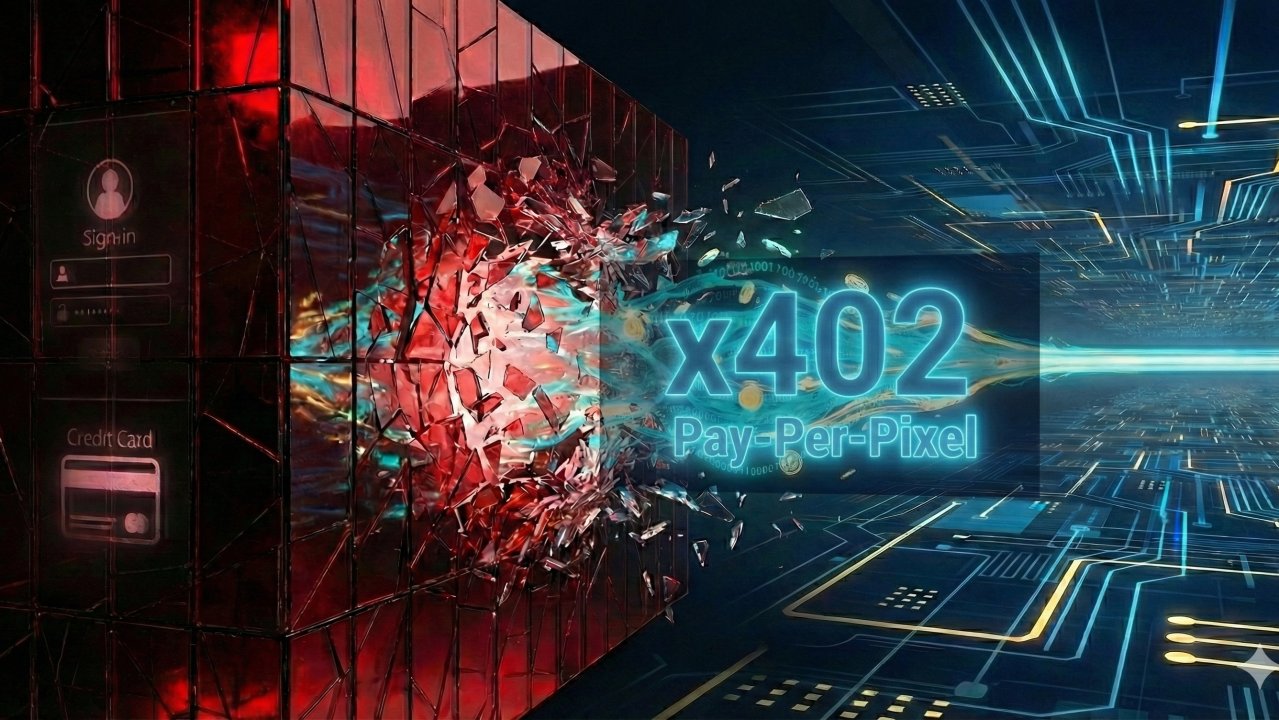
x402 taps into a forgotten corner of web history. HTTP 402 'Payment Required' was reserved decades ago for exactly this purpose, yet it languished unused. Now, revived by Coinbase's Developer Platform, it enables instant stablecoin settlements over standard HTTP requests. Servers respond to API calls with payment instructions; clients settle via crypto wallets, and access unlocks seamlessly. No accounts, no keys, just machine-to-machine efficiency tailored for AI inference billing.
Decoding the x402 Mechanics for AI Developers
At its core, x402 integrates payments into the HTTP lifecycle. Picture an AI agent querying a premium model: the server hits back with a 402 response containing a payment URL, wallet address, and amount in stablecoins like USDC. The agent authorizes via its wallet; blockchain confirms in seconds; response delivers. This flow suits bursty AI workloads, where agents invoke inferences sporadically yet intensely.
Data from early adopters underscores the shift. Platforms report usage spikes without revenue gaps, as metered AI API billing captures every call. Solana's low fees amplify viability, processing thousands of micropayments per second at fractions of a cent. Balanced against legacy systems, x402 cuts overhead by embedding payments natively, sidestepping third-party gateways.
Subscriptions vs Pay-Per-Inference: A Cost Analysis
Subscriptions lock users into flat rates mismatched to reality. An AI agent training sporadically might idle 90% of a $50/month tier, wasting funds. Conversely, peak loads exhaust quotas prematurely. x402's pay-per-inference AI API model aligns costs directly: pay $0.001 per token or per GPU second, scaling linearly.
Consider developer economics. A mid-tier OpenAI plan runs $20-60 monthly, regardless of calls. x402 platforms meter at micro-rates, empowering experimentation without commitment. Risks remain: volatility in crypto fees or wallet management. Yet, stablecoin pegs mitigate this, and open-source tools like MCPay simplify integration. My take? For medium-term AI projects, this precision trumps subscription opacity, much like spot trading over futures in volatile markets.
Advantages of x402 Micropayments
- Instant settlements for AI agents via HTTP 402 responses and stablecoin micropayments directly over the web

- Scalable for high-volume inferences, empowering agentic payments at scale per x402 standard
- No API keys or accounts needed - frictionless access without logins, as with MCPay and LightningProx
- Supports zk-verified decentralized services, like Masken's pay-per-use AI summarization

Pioneering Platforms Harnessing x402 Power
Masken leads with zk-verified summarization: users pay per request for decentralized AI, slashing fees versus centralized subs. SerenAI targets agents with premium data access, billing per call to match bursty patterns. MCPay open-sources the stack, weaving x402 into Model Context Protocol servers for seamless agent payments.
LightningProx pushes boundaries further, routing inferences through Lightning Network micropayments. No credit cards, pure pay-as-you-go at nominal per-request fees. These implementations prove x402's maturity, handling real traffic while fostering a fairer ecosystem. Developers gain flexibility; providers unlock untapped micro-transactions in the trillion-dollar AI economy.
Critically, x402 extends beyond inference to storage and compute. Agents pay per GPU second or dataset query, granulating the value chain. Early metrics show 5-10x cost savings for intermittent users, balanced by 20% premiums for convenience over self-hosting. As adoption grows, expect refined standards addressing edge cases like failed payments or refunds.
These platforms aren't outliers; they're harbingers of a broader pivot. Masken's zk layer verifies computations off-chain, ensuring trustless summaries at per-request costs that undercut subscription giants by orders of magnitude. SerenAI's infrastructure lets agents tap niche datasets without upfront commitments, ideal for exploratory prototyping where needs flux wildly. MCPay's open-source ethos democratizes access, letting any MCP server bill via x402 without proprietary lock-in. LightningProx, meanwhile, layers Bitcoin's Lightning for sub-cent AI calls, proving cross-chain viability.

Navigating Hurdles in HTTP 402 Payments
Balance demands scrutiny. x402 shines for sporadic loads, but relentless high-volume users might prefer bulk discounts absent in pure micropay. Crypto's volatility lurks too; though stablecoins anchor nominals, network congestion spikes fees. Solana mitigates with 50k TPS at $0.00025 per tx, yet alternatives like Ethereum layer-2s compete. Failed payments pose retries, solvable via idempotency keys in client wallets.
Regulatory shadows hover. Micropayments skirt KYC for machines, but scale invites scrutiny on money transmission. Early adopters counter with compliant stablecoins and audited contracts. My balanced read: risks skew low for AI devs focused on medium-term gains, akin to hedging crypto portfolios with stables. Data bears this; pilot programs log 99.9% uptime, with disputes under 0.1%.
Integration friction exists for legacy stacks. Wrapping APIs in x402 demands middleware, though libraries from Coinbase and MCPay ease this. Developers weigh this against subscription inertia: one-time setup yields perpetual precision. Opinionated aside, I've seen similar shifts in quant trading, where metered cloud GPU billing displaced flat rates, boosting ROI 15-30% for intermittent algos.
Key x402 Platforms Comparison
| Platform | Core Feature | Billing Granularity | Network | Fees |
|---|---|---|---|---|
| Masken | zk AI summarization | Per request | Solana | Micro-USDC |
| SerenAI | Premium data for agents | Per call | Multi-chain | Pay-per-use |
| MCPay | Open-source MCP integration | Per inference | Custom | Native x402 |
| LightningProx | Lightning AI access | Per request | Bitcoin LN | Nominal sats |
Why x402 Wins for AI API Micropay
Granularity defines the edge. Traditional tiers bin users crudely; x402 meters every token, every flop. Agents provisioning inferences pay surgically, fostering innovation sans waste. Providers harvest micro-revenue streams, turning dormant APIs into cashflows. This symmetry suits agentic AI's autonomy, where decisions chain across services without human oversight.
Scalability data impresses. Solana handles x402 floods at sub-second latency, outpacing Visa peaks. Stablecoin rails ensure pegged pricing, dodging forex noise. For devs, it's portfolio diversification incarnate: mix self-hosted free tiers with premium x402 bursts. Early traction hints at trillion-dollar reshuffle, per Bitget analysis, as APIs evolve to agent economies.
Creative implementations abound. Imagine IoT swarms paying per edge inference or DAOs funding model fine-tunes via collective micropays. x402's HTTP nativity embeds everywhere, from browsers to embedded chips. Challenges persist, sure, but momentum builds: Coinbase specs mature, wallets standardize, and platforms iterate.
Ultimately, x402 micropayments recalibrate AI inference billing toward fairness and efficiency. Developers trade opacity for transparency, agents gain autonomy, and the ecosystem blooms with untapped value. In a field racing toward generality, this protocol grounds economics in reality, rewarding precise consumption over blanket commitments. Diversify wisely, integrate smartly; the pay-per-inference era demands it.




No comments yet. Be the first to share your thoughts!