x402 Micropayments for AI Inference APIs: Pay-Per-Call Billing Setup Guide

The AI inference market demands billing precision, where every API call incurs exact costs without bloated subscriptions. x402 micropayments for AI inference APIs deliver this through pay-per-call billing, leveraging the revived HTTP 402 ‘Payment Required’ status code. Servers signal payments upfront, clients settle via stablecoins or Lightning Network, then access unlocks instantly. This setup suits autonomous AI agents, sensors, and high-volume workloads, fostering a fairer ecosystem for developers and providers alike.


Providers gain steady revenue streams tied to real usage, while users avoid overpaying for sporadic needs. In a world shifting to agentic AI, x402 stands out as the internet-native standard, backed by players like Coinbase for seamless HTTP transactions. It’s not just hype; it’s a practical rail for micropay per call AI APIs, eliminating API keys and credit card friction.
x402 Protocol Mechanics for AI Services
At its core, x402 revives a long-dormant HTTP code to enforce machine-readable payments. When an AI client hits your inference endpoint, the server responds with 402, embedding payment details in headers: amount, currency, wallet address, and nonce for idempotency. Clients like AI agents parse this, execute on-chain transfers via stablecoins or Lightning, then retry with proof. No middleware bloat; pure protocol elegance.
This shines for 402 protocol AI inference, where compute is bursty and unpredictable. Traditional rate limits frustrate; x402 enforces economically. A sensor streaming ML inferences pays per prediction, scaling effortlessly. Opinion: Subscriptions masked inefficiencies; x402 exposes true marginal costs, pressuring providers to optimize while rewarding efficiency.

Why Pay-Per-Inference Billing Transforms AI Monetization
Granular billing unlocks new models: charge per token generated, per millisecond of GPU time, or flat per call. AI developers sidestep Stripe’s fees and delays; x402 settles in seconds at pennies. For enterprises, it’s downside protection against idle capacity costs. Users benefit from transparency; no black-box quotas.
Consider high-volume scenarios: autonomous agents querying weather APIs or running inferences on edge devices. x402 micropayments AI APIs make this viable, as even IoT devices join via simple HTTP. Early adopters report 30-50% cost savings over subs, per industry chatter. Creatively, pair it with dynamic pricing: surge during peak loads, discount off-hours. This isn’t utopian; it’s deployable today with tools like MCPay or ApiCharge.
Foundational Steps to Deploy x402 Pay-Per-Call
Setting up demands minimal infrastructure tweaks. Begin by auditing your API stack for 402 compatibility. Node. js, Python Flask, or FastAPI servers integrate via middleware. Key: expose payment endpoints securely, validate proofs server-side. Hesitant? Start small on a testnet.
Master x402 Pay-Per-Call Billing: Secure Setup for AI APIs
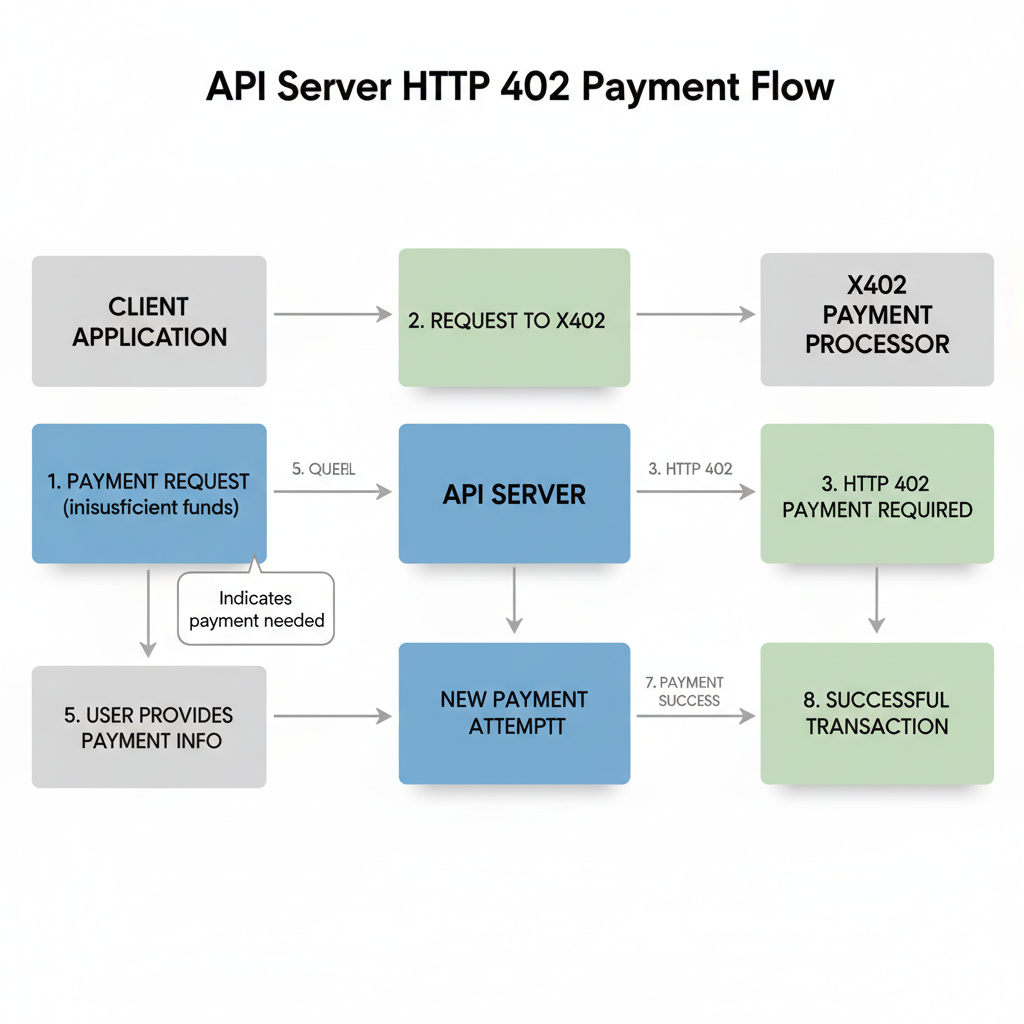
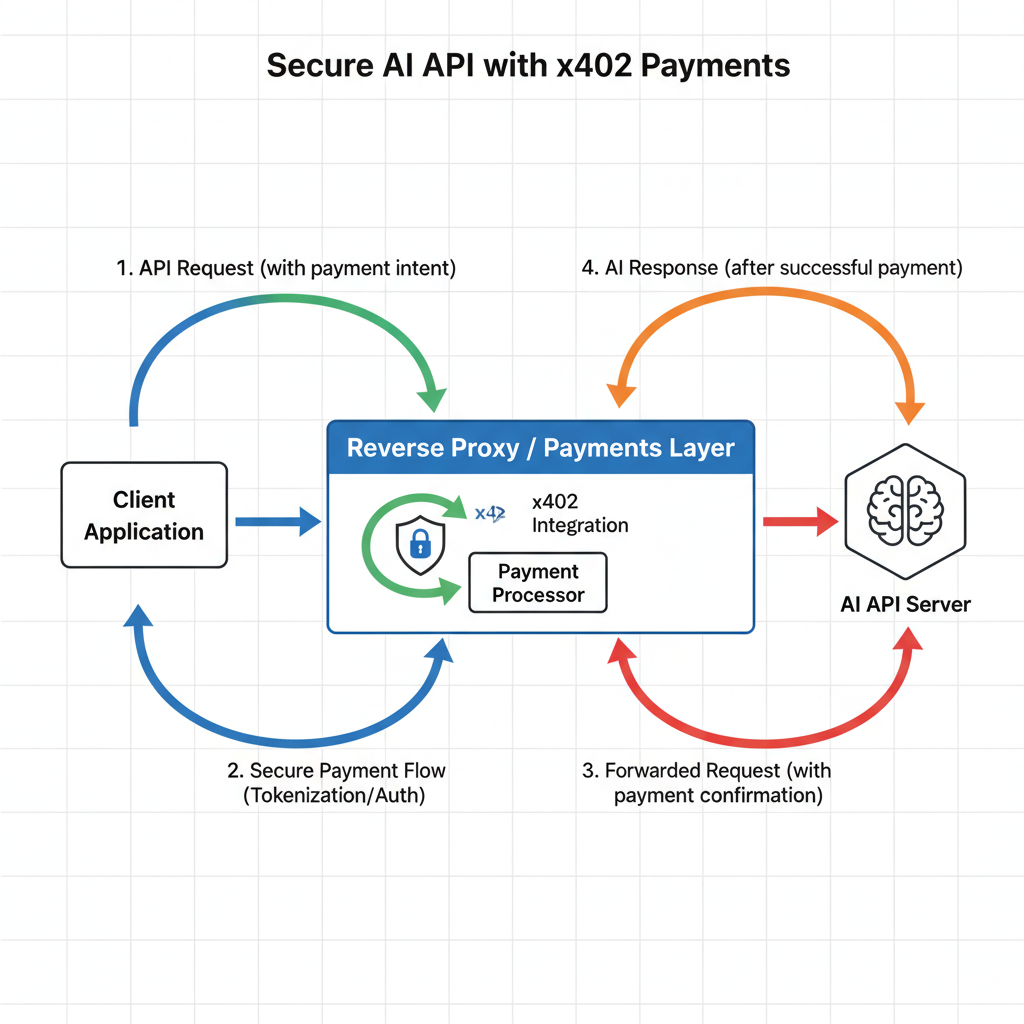


First, choose your rail: Stellar for smart contracts, Bitcoin Lightning for speed, or USDC for stability. Platforms like MCPay bolt x402 onto Model Context Protocol servers, handling the plumbing. ApiCharge offers a reverse proxy turnkey, with Soroban contracts for pay per inference billing. Lightning suits sub-cent fees, ideal for dense inference streams.
Next, configure client-side: AI agents need wallets and payment logic. Python SDKs like aiagent-payments abstract this, supporting modular providers. Test loops ensure retries work post-payment. Professionally, monitor settlement finality; chain reorgs are rare but demand idempotency.
Security anchors the entire flow. Use nonces and signatures to prevent replays; validate proofs against blockchain explorers or light clients. In my view, over-reliance on centralized processors risks single points of failure, so favor decentralized rails like Lightning for resilience. Cautiously, audit for oracle dependencies in dynamic pricing, as stale data erodes trust.
Hands-On Code for x402 Server Integration
Let’s get tactical with a Python FastAPI snippet. This middleware intercepts inference requests, issues 402 challenges, and gates access on payment proof. Adapt for your stack; it’s lightweight, under 50 lines core logic. Production tip: wrap in async for high throughput, and log payments for reconciliation.
FastAPI x402 Payment Middleware for AI Inference Endpoints
To implement pay-per-call billing using the x402 protocol in your FastAPI-based AI inference API, create a custom HTTP middleware. This middleware intercepts requests to protected endpoints, verifies payment via a token, and returns a 402 Payment Required response if needed. Always validate payments server-side and use secure token handling.
from fastapi import FastAPI, Request, HTTPException
from typing import Callable

# Mock payment verification function
def verify_payment(payment_token: str | None) -> bool:
    """
    Verify the payment token against your micropayment provider.
    In production, integrate with your x402 payment service.
    """
    # Example: check against a set of valid prepaid tokens
    valid_tokens = {"valid-token-123", "valid-token-456"}
    return payment_token in valid_tokens

app = FastAPI()

@app.middleware("http")
async def x402_payment_middleware(request: Request, call_next: Callable) -> Request:
    """
    Middleware to enforce x402 Payment Required for AI inference endpoints.
    Checks for a valid payment token before allowing the request to proceed.
    """
    # Apply to AI inference paths only
    if request.url.path.startswith("/v1/infer") or request.url.path.startswith("/v1/generate"):
        payment_token = request.headers.get("X-Payment-Token")

        if not verify_payment(payment_token):
            raise HTTPException(
                status_code=402,
                headers={
                    "WWW-Authenticate": 'x402 uri="https://pay.yourdomain.com/x402?method=post&url=/v1/infer&call_id=req-' + request.headers.get("X-Request-ID", "unknown") + '"'
                },
                detail="Payment required for this inference call. Please obtain a payment token."
            )

    response = await call_next(request)
    return response

# Example protected endpoint
@app.post("/v1/infer")
async def infer(request: Request):
    """
    Your AI inference endpoint. Protected by the x402 middleware.
    """
    # Simulate AI inference
    return {"result": "Inference completed successfully."}
Caution: This is a simplified example for illustration. In production, replace the mock `verify_payment` function with secure integration to a micropayment provider supporting x402 (e.g., via Web Monetization or custom billing). Log payment attempts, handle rate limiting, and ensure the payment URI is dynamically generated with request-specific details to prevent replay attacks. Test thoroughly to avoid disrupting legitimate users.
Client-side mirrors this simplicity. Agents parse x402 micropayments AI APIs headers, sign transactions via SDKs, and retry. aiagent-payments handles wallet juggling across providers, from USDC to Lightning invoices. Test rigorously: simulate 1,000 calls per minute to stress latency. Opinion: This protocol’s genius lies in universality; no bespoke SDKs needed beyond HTTP libs.
Deployment Checklist and Best Practices
Before going live, tick these essentials. Platforms like ApiCharge streamline via reverse proxy, bundling Soroban contracts for Stellar-based pay per inference billing. MCPay fits MCP servers seamlessly. Lightning excels for sub-penny micropay per call AI APIs, dodging gas wars.
Real-world wins emerge fast. Sensors auto-pay for ML inferences; agents chain API calls with batched settlements. Fintech observers dub it “Stripe for AI agents, ” and rightly so: HTTP ubiquity means edge devices participate. Creatively, tier pricing by model size – cheap for Llama, premium for frontier – fostering competition.
Challenges persist, demanding nuance. Network congestion spikes fees; mitigate with Layer 2s or stablecoin batches. Regulatory fog around automated payments warrants compliance scans, especially for enterprise clients. Yet, the upside dwarfs risks: providers reclaim value from shadow usage, users gain precision. x402 agent payments inference isn’t a gadget; it’s infrastructure for agentic economies, where compute trades like bandwidth.
Digital services shift to usage-based billing – per API call, per inference. x402 makes this inevitable.
Providers experimenting report smoother cash flows, minus churn from unused subs. Developers iterate faster, unburdened by key management. As adoption swells – Coinbase, Ledger, Dynamic Wallet paving lanes – expect ecosystems to bloom: marketplaces for inference slices, paid by the token. Deploy now, and position ahead of the curve; hesitation cedes ground in this granular gold rush.