
Plan the route
Setting up AI 402 Pay for a micro-transaction journey requires sequencing your infrastructure before you launch. The protocol, spearheaded by Coinbase’s Nemil Dalal, acts as the backbone for agent-to-agent commerce, but it does not run in a vacuum. You need to map out the flow of data and value before writing a single line of contract code.
Start by auditing your AI agents’ current capabilities. Do they have the necessary API keys to interact with blockchain networks? Can they parse the specific headers required by the x402 standard? This is your foundation. If an agent cannot signal intent to pay, the smart contract will never trigger. Verify these prerequisites early to avoid mid-build roadblocks.
Next, select your payment rail. While Ethereum is the default for many developers, its gas fees can eat into micro-transactions under a few dollars. Consider layer-2 solutions like Base or Arbitrum for speed and cost efficiency. The choice here dictates your user experience and your operational margins. A $0.05 payment on mainnet Ethereum might cost $2.00 in gas, rendering the transaction economically impossible.
Finally, define the settlement logic. How will the funds be distributed? Will they go to a single wallet or be split among multiple service providers? Write this logic into your smart contract’s execution phase. Testing this flow in a sandbox environment is non-negotiable. You need to see the money move from the user’s wallet, through the contract, and into the provider’s account before going live.

Verify that your AI agents possess the necessary API keys and headers to recognize and signal payment intent. Ensure they can communicate with the blockchain network you intend to use without latency issues.

Choose a blockchain network that balances security with transaction costs. For micro-transactions, layer-2 solutions like Base or Arbitrum are often superior to Ethereum mainnet due to lower gas fees.
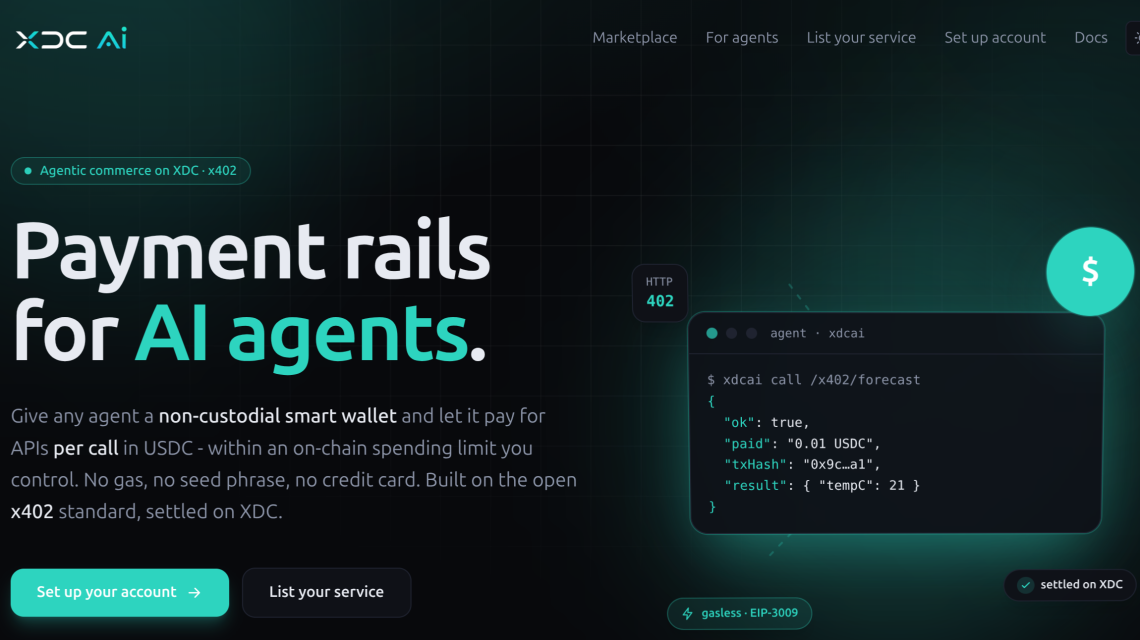
Write the smart contract logic to determine fund distribution. Specify whether payments go to a single wallet or are split among multiple providers, ensuring the math aligns with your business model.

Run the entire flow in a testnet environment. Watch the money move from the user’s wallet, through the contract, and into the provider’s account to catch any edge cases before public launch.
AI 402 Pay: Which Protocol Fits Your Use Case
The x402 standard is reshaping how AI agents handle micro-transactions, moving beyond simple API calls to a model where content is unlocked only after payment is verified. With major players like Coinbase and Stripe entering the space, developers now have distinct paths to choose from. Selecting the right protocol depends on whether you prioritize transaction speed, cost efficiency, or developer familiarity.
Protocol Comparison
| Feature | x402 (Coinbase/Cloudflare) | Stripe Machine Payments | Nevermined AI Billing |
|---|---|---|---|
| Primary Focus | Decentralized agent-to-agent commerce | Traditional web integration | Data marketplace monetization |
| Settlement | Cryptocurrency (Native) | Fiat (Credit Card/Bank) | Cryptocurrency (NFT/Token) |
| Verification | On-chain proof of payment | Server-side webhook | Smart contract escrow |
| Best For | Autonomous AI agents | Human-facing checkout flows | Sensitive data licensing |
Choosing the Right Path
For autonomous agents operating in decentralized environments, the x402 protocol offers the most direct integration. It removes the need for traditional payment gateways, allowing agents to pay for compute or data instantly using crypto. This is ideal for high-frequency, low-value transactions where traditional banking fees would erode margins.
If your application serves human users or requires integration with existing financial infrastructure, Stripe’s Machine Payments provide a smoother experience. It bridges the gap between AI interactions and familiar fiat currency, reducing friction for users who may not hold cryptocurrency. This approach is better suited for consumer-facing applications where trust and ease of use are paramount.
For data-heavy applications, Nevermined’s approach offers specialized tools for licensing and monetizing datasets. It is particularly useful when the value lies in the data itself rather than the computation, allowing for granular control over access and usage rights.
Timing and Logistics
Smart contracts automate the friction in parking, transit, and reservations by linking access directly to payment. Instead of manual checks or waiting for staff, AI agents pay on-chain and receive immediate digital keys or QR codes. This shifts logistics from human coordination to programmable rules, reducing delays and no-shows.
Parking and Transit
For parking, smart contracts release access the moment payment clears. Drivers scan a code at the gate, and the contract verifies the transaction before unlocking the barrier. Transit systems can use similar logic for ticketing, where the smart contract validates the fare and grants entry without physical tickets.
| Use Case | Traditional Method | Smart Contract Method |
|---|---|---|
| Parking | Cash, card swipe, or app login | Auto-payment via agent, instant access |
| Transit | Physical ticket or stored-value card | On-chain fare validation, seamless entry |
| Reservations | Manual confirmation, email links | Auto-booking, instant digital key |
Reservations and timing limits to account for
Reservations often suffer from no-shows and manual cancellations. Smart contracts can hold funds until the service is delivered or the time window expires. If the user doesn't show up, the contract keeps the payment. If they arrive, the contract releases the access credential automatically. This creates a fairer system for both providers and users.
Decision Guide
Choose smart contracts for high-volume, low-cost transactions where speed matters. They are ideal for parking, transit, and short-term reservations. Avoid them for complex, high-touch services that require human negotiation or customization.
Ai 402 pay: what to check next
If you are considering integrating AI 402 Pay into your platform, you likely have practical concerns about security, compatibility, and cost. This section addresses the most common questions from developers and business owners evaluating the x402 protocol.
The x402 protocol is designed to be lightweight and fast, making it ideal for AI agents that need to make thousands of small payments per second. As the ecosystem matures, we expect more wallets and payment gateways to support x402 natively, further simplifying adoption for businesses.
No comments yet. Be the first to share your thoughts!