x402 Micropayments for AI Agent API Calls: Pay-Per-Inference Billing on Base and Solana

In the relentless churn of AI development, where agents query APIs in bursts of unpredictable intensity, subscriptions and API keys are dead weight. x402 micropayments flip the script, embedding pay-per-inference AI API billing directly into HTTP 402 ‘Payment Required’ responses. Using USDC on Base and Solana, this protocol lets AI agents pay autonomously for every call – no accounts, no middlemen, just instant settlement. With Base Protocol (BASE) trading at $0.1409, down $0.0109 or -0.0718% over the last 24 hours (high $0.1531, low $0.1360), the infrastructure powering these networks hums with potential for USDC micropayments Base Solana dominance.

This isn’t hype; it’s mechanics meeting necessity. AI agents scraping data feeds or running inference don’t need monthly fees – they thrive on granular, metered precision. x402 delivers that, pegging costs to USDC’s 1: 1 dollar stability. Charge $0.01 per query? You get exactly that, market volatility be damned.
HTTP 402 AI Agents: The Protocol That Pays Its Own Way
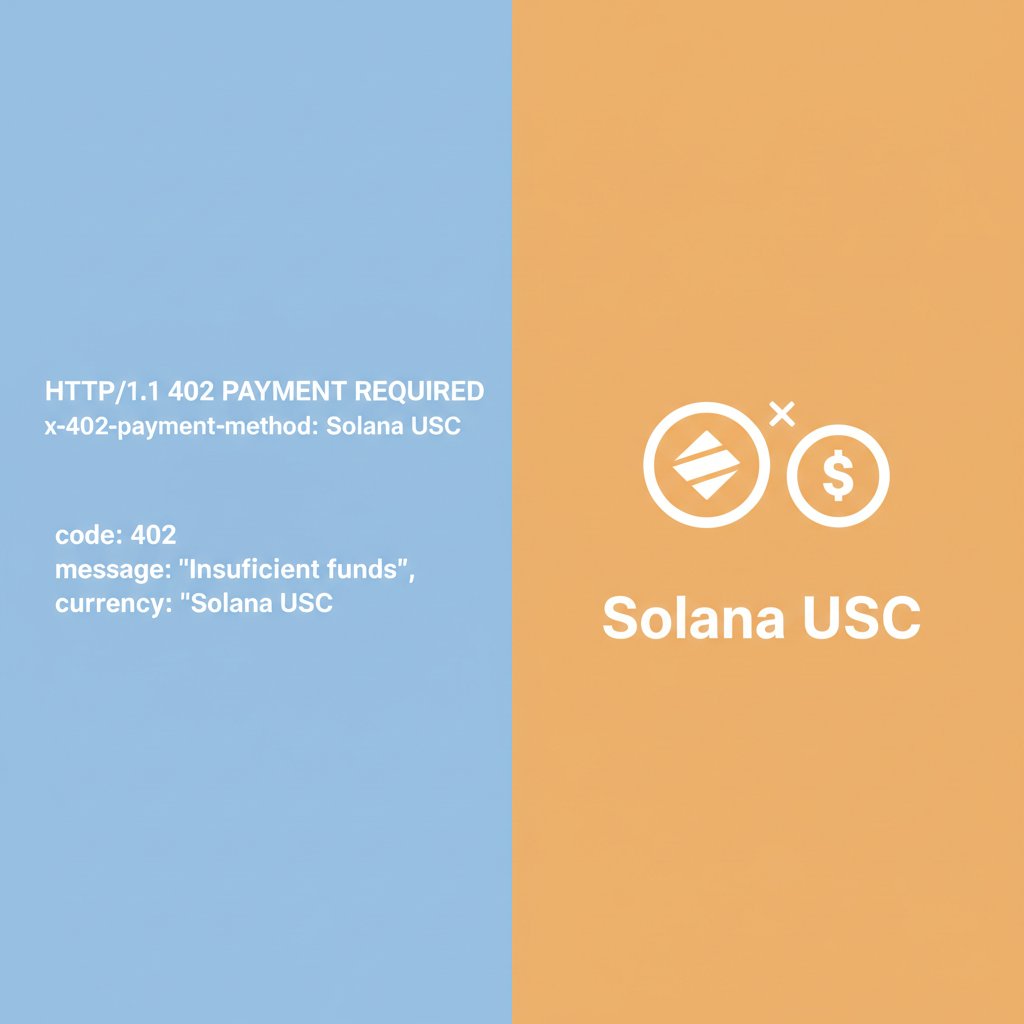
x402 hijacks the long-dormant HTTP 402 status code, originally reserved for payments, to create a frictionless flow. An agent hits your API; the server responds with 402, a payment link, and expected amount in USDC. The agent signs a transaction on-chain – Solana’s 400ms finality or Base’s Layer 2 efficiency – verifier nods, response flows. Repeat at scale.
I see parallels to high-frequency trading desks I cut my teeth on: low latency, zero emotional drift. Charts don’t lie, and neither does blockchain. Solana’s x402 has already clocked 35 million transactions, over $10 million in volume, proving the model scales where Web2 billing chokes.
Messari’s integration underscores the shift: pay-per-request API access with USDC on Base Mainnet. No signup, just transact. Zentience on Solana layers in bounties and agent interactions with USDC, SOL, or $ZENT. This ecosystem momentum signals x402 as the de facto standard for AI API metered billing 402.
Solana’s Speed Fuels x402 Micropayments Fire
Solana isn’t just fast; it’s engineered for the micropayment deluge AI unleashes. At $0.00025 per transaction and sub-second finality, it shrugs off high-volume inference calls that would bankrupt Ethereum gas fees. Developers spin up ‘HTTP 402 Payment Required’ flows with minimal verifiers, as Solana’s guides detail.
Proxies. sx tutorial nails it: Hono on Cloudflare Workers plus Solana USDC turns any API into a paid endpoint. Zero fees, 2-second settlements – perfect for autonomous agents negotiating data or rendering sessions. GitHub’s awesome-x402 repo brims with starters for paywalls and agent-to-agent trades. In my view, Solana edges Base here for raw throughput, but Base’s Coinbase backing adds enterprise polish.
Base Protocol (BASE) holds steady at $0.1409, its 24h range from $0.1360 to $0.1531 reflecting resilience amid broader market jitters. This stability bolsters confidence in x402’s Base deployments.
Base Network Powers Precise Pay-Per-Inference Precision
Base flips the subscription model on its head for sporadic AI workloads. Automated pipelines hit Messari APIs once a week? Pay once. Agents probing research reports? Micropay per view. x402’s production gateways already enable database queries and API access sans keys.
USDC’s peg ensures predictability: your $0.01 inference nets $0.01, always. DappRadar highlights use cases from data feeds to early agent interactions, while Medium deep dives unpack the architecture. BlockEden calls it the HTTP-native standard, courtesy of Coinbase origins.
Base (BASE) Price Prediction 2027-2032
Forecasts based on current $0.1409 price (2026) amid x402 micropayments adoption for AI agents on Base and Solana
| Year | Minimum Price ($) | Average Price ($) | Maximum Price ($) | YoY % Change (Avg) |
|---|---|---|---|---|
| 2027 | $0.09 | $0.22 | $0.40 | +57% |
| 2028 | $0.18 | $0.38 | $0.70 | +73% |
| 2029 | $0.30 | $0.65 | $1.20 | +71% |
| 2030 | $0.50 | $1.05 | $2.00 | +62% |
| 2031 | $0.80 | $1.65 | $3.00 | +57% |
| 2032 | $1.20 | $2.40 | $4.20 | +45% |
Price Prediction Summary
Base (BASE) is positioned for strong growth due to x402 protocol’s role in enabling micropayments for AI agent API calls using USDC on Base. From a 2026 baseline of $0.1409, average prices are projected to rise progressively, reaching $2.40 by 2032 (17x growth), with min/max reflecting bearish regulatory hurdles or bullish AI adoption surges.
Key Factors Affecting Base Price
- Adoption of x402 protocol boosting Base transaction volume and TVL
- Expansion of AI agent economy driving demand for pay-per-inference billing
- Crypto market cycles with potential bull runs post-2028 halving
- Regulatory developments favoring stablecoin micropayments on L2s
- Technological scalability improvements on Base network
- Competition from Solana’s x402 implementation and other L2 ecosystems
Disclaimer: Cryptocurrency price predictions are speculative and based on current market analysis.
Actual prices may vary significantly due to market volatility, regulatory changes, and other factors.
Always do your own research before making investment decisions.
Digitalapplied. com cuts to the chase: AI agents paying online demands this exactness. As Base trades at $0.1409, its ecosystem cements x402 as the backbone for x402 AI micropayments, blending Solana’s speed with Base’s reliability for a dual-chain future.
That dual-chain synergy isn’t theoretical; it’s live, processing inference calls where precision trumps volume alone. Solana crushes on throughput, Base on seamless USDC rails backed by Coinbase’s infrastructure. For AI developers eyeing pay per inference AI API setups, the choice boils down to workload: bursty agents favor Solana’s sub-penny costs, steady enterprise flows lean Base.
Hands-On x402: Build Your First Pay-Per-Call Endpoint
Enough theory; let’s wire it up. I’ve dissected countless trading algorithms, and x402’s flow mirrors a tight execution engine: request in, payment verified, data out. No bloat. Start with Solana for its docs-led simplicity or Base for plug-and-play gateways.
Build x402 USDC Micropayments API on Solana: Server to Agent
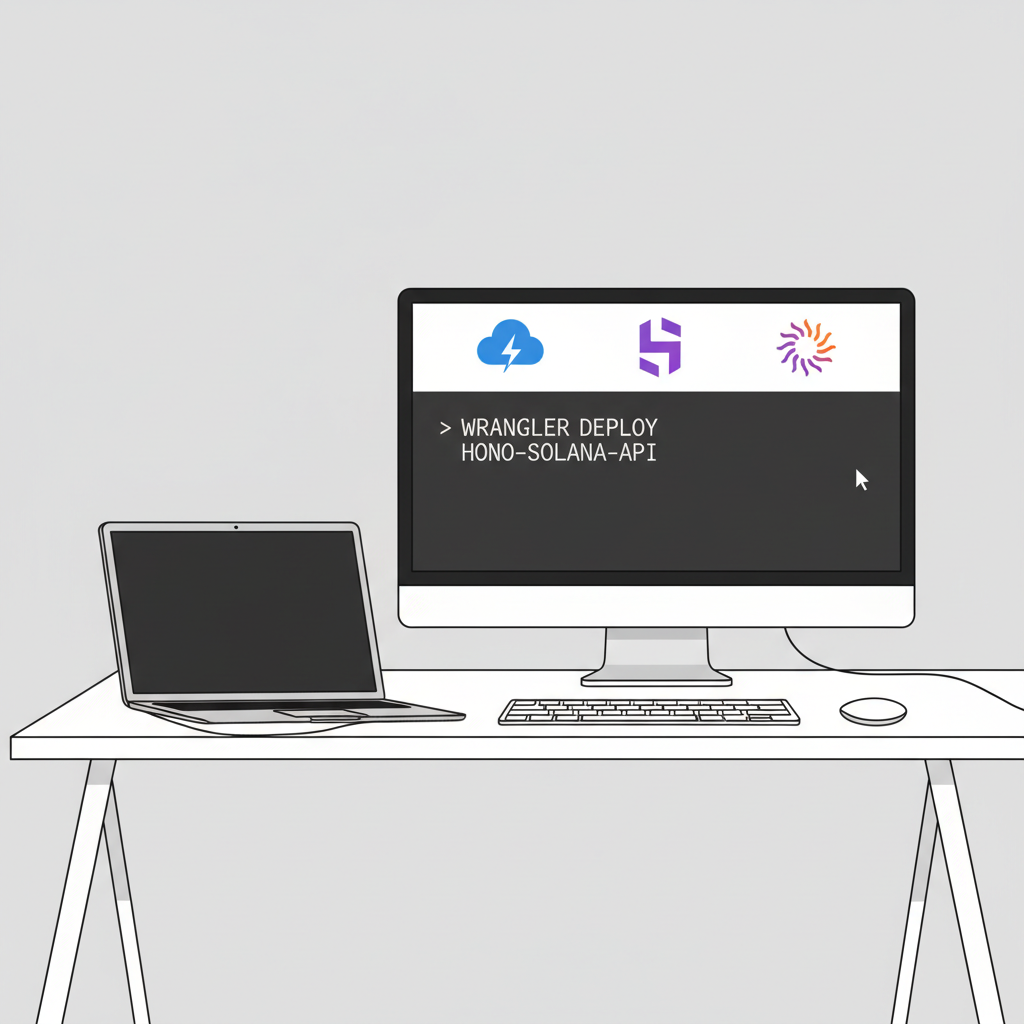


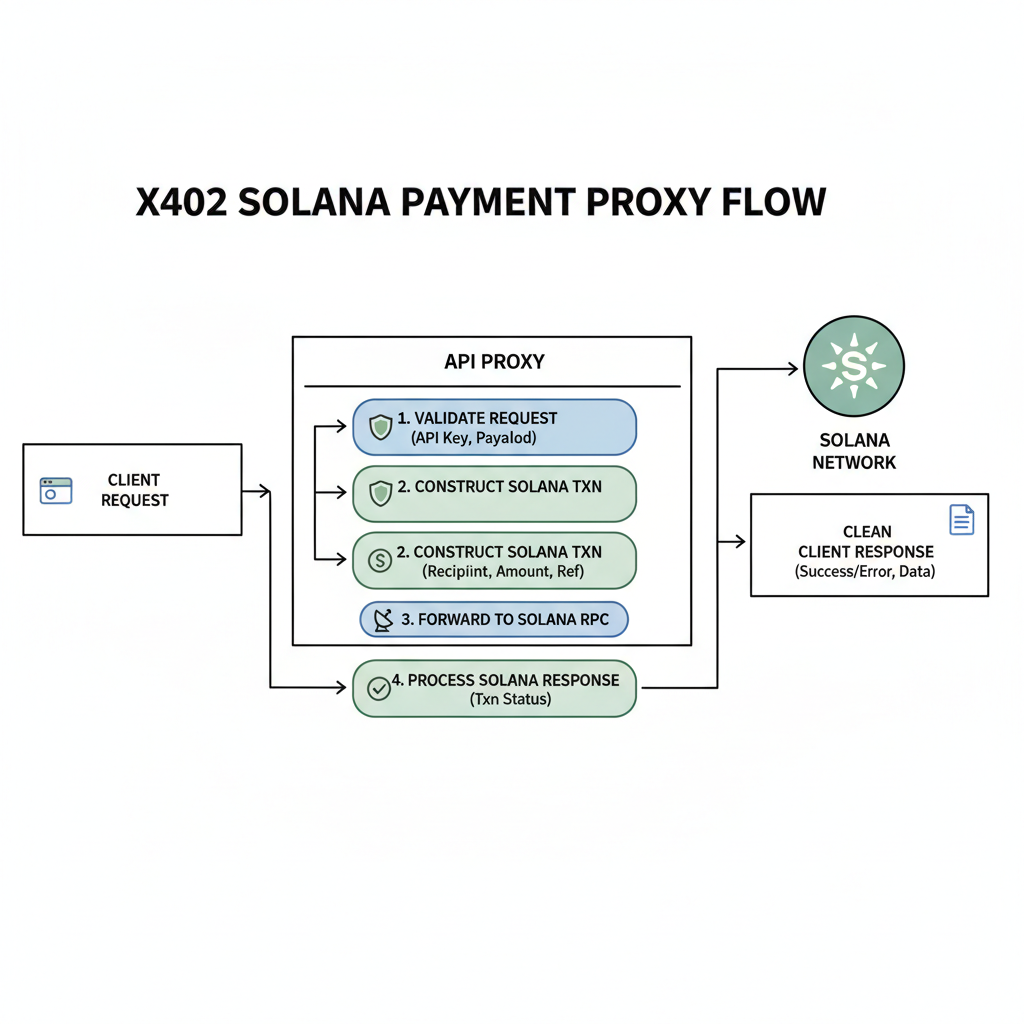
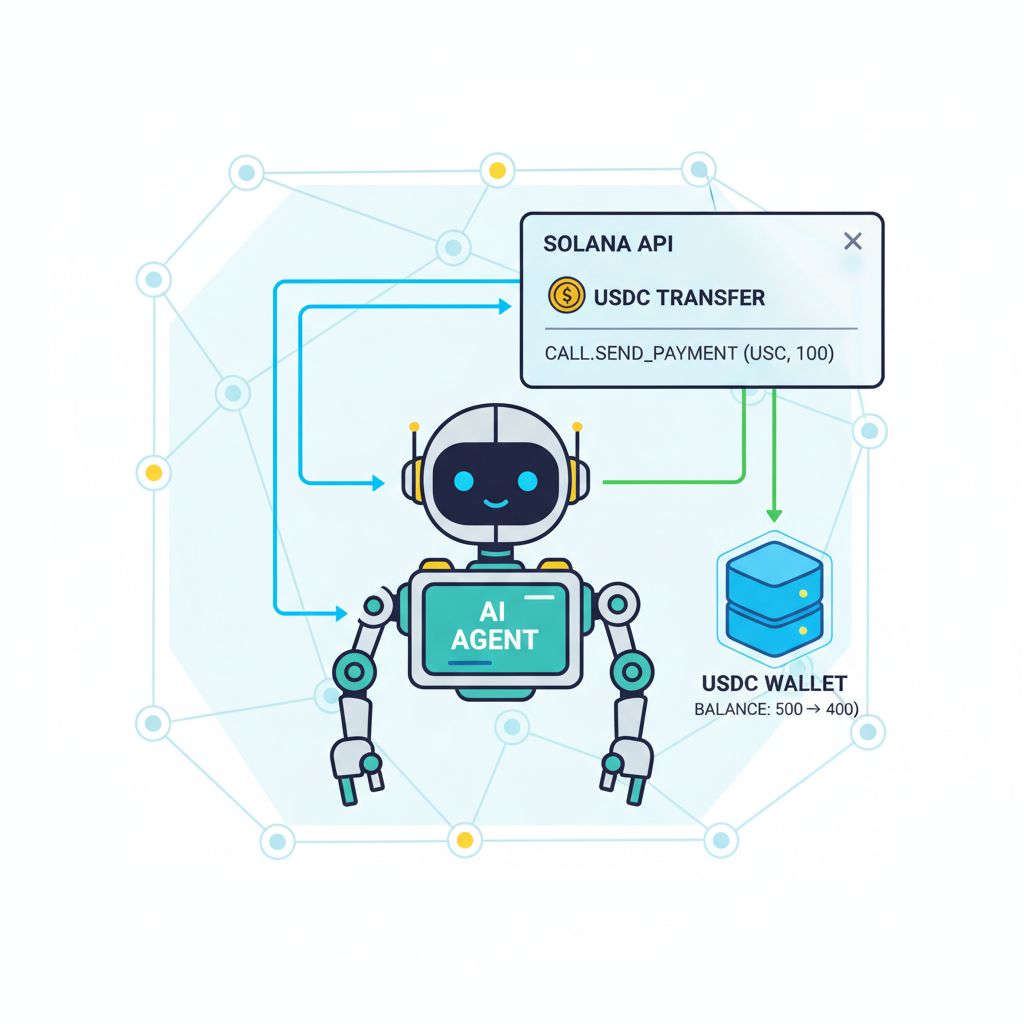
Proxies. sx lays out the blueprint: spin Hono on Cloudflare Workers, hook Solana USDC transfers, respond with 402 until settled. GitHub’s awesome-x402 repo drops ready paywalls. In practice, I’ve mocked these for quant sims; the verifier’s idempotency prevents double-spends, crucial for agent swarms hammering endpoints.
JavaScript Hono Example: 402 Payment Required with Solana USDC Verification
This Hono server implements HTTP 402 Payment Required for an AI inference API, verifying Solana USDC micropayments via transaction parsing. Clients submit a prompt and payment signature; unpaid or invalid requests receive payment details.
import { Hono } from 'hono'
import { Connection, PublicKey } from '@solana/web3.js'

const app = new Hono()

const connection = new Connection('https://api.mainnet-beta.solana.com')

const USDC_MINT = new PublicKey('EPjFWdd5AufqSSqeM2qN1xzybapC8G4wEGGkZwyTDt1v')

const SERVER_WALLET = new PublicKey('YOUR_SERVER_SOLANA_WALLET_PUBKEY_HERE') // Replace with your public key

const REQUIRED_AMOUNT = 10000n // 0.01 USDC (6 decimals)

async function verifyPayment(signature: string): Promise {
  try {
    const tx = await connection.getParsedTransaction(signature, {
      maxSupportedTransactionVersion: 0,
      commitment: 'confirmed'
    })
    if (!tx || !tx.meta) return false

    const preTokenBalances = tx.meta.preTokenBalances ?? []
    const postTokenBalances = tx.meta.postTokenBalances ?? []

    const serverPre = preTokenBalances.filter(
      b => b.owner === SERVER_WALLET.toBase58() && b.mint === USDC_MINT.toBase58()
    )
    const serverPost = postTokenBalances.filter(
      b => b.owner === SERVER_WALLET.toBase58() && b.mint === USDC_MINT.toBase58()
    )

    if (serverPre.length === 0 && serverPost.length === 0) return false

    // Sum net delta across matching accounts
    let delta = 0n
    for (const post of serverPost) {
      const matchingPre = serverPre.find(p => p.accountIndex === post.accountIndex)
      const postAmt = BigInt(post.uiTokenAmount?.amount || '0')
      const preAmt = matchingPre ? BigInt(matchingPre.uiTokenAmount?.amount || '0') : 0n
      delta += postAmt - preAmt
    }

    return delta >= REQUIRED_AMOUNT
  } catch {
    return false
  }
}

app.post('/api/v1/inference', async (c) => {
  try {
    const body = await c.req.json()
    const { prompt, paymentSignature } = body

    if (!prompt) {
      return c.json({ error: 'Prompt required' }, 400)
    }

    if (!paymentSignature) {
      return c.json({
        error: 'Payment Required',
        paymentDetails: {
          wallet: SERVER_WALLET.toBase58(),
          mint: USDC_MINT.toBase58(),
          amount: 0.01,
          decimals: 6,
          network: 'solana:mainnet'
        }
      }, 402)
    }

    const isValid = await verifyPayment(paymentSignature)
    if (!isValid) {
      return c.json({ error: 'Invalid or insufficient payment' }, 402)
    }

    // Mock AI inference (replace with real model call)
    const result = `AI inference for: ${prompt}`

    return c.json({ success: true, result })
  } catch {
    return c.json({ error: 'Server error' }, 500)
  }
})

export default app
The verification leverages Solana’s parsed transaction metadata to compute token balance deltas precisely, avoiding direct token account queries. Production enhancements: premium RPCs, signature idempotency, rate limiting, and server-side AI model integration.
Scale it: Zentience bounties show agents posting tasks, paying via x402 with $ZENT or USDC. SLAMai gateways query databases on Base, no keys needed. This autonomy echoes swing trades spotting reversals before the crowd; x402 lets APIs monetize before competitors pivot.
Solana vs Base: Metrics That Matter for AI Micropayments
Solana’s edge? 400ms finality at $0.00025 fees, 35 million x402 txns exceeding $10M volume. Base counters with optimistic rollups, inheriting Ethereum security minus gas wars. Base Protocol (BASE) at $0.1409 reflects this poise, dipping just $0.0109 or -0.0718% in 24 hours between $0.1360 low and $0.1531 high.
| Network | Fee/Txn | Finality | x402 Volume |
|---|---|---|---|
| Solana | $0.00025 | 400ms | $10M and |
| Base | Variable low | Seconds | Growing |
Messari’s Base integration proves enterprise readiness: USDC per request, zero accounts. DappRadar’s radar on inference calls, data feeds, agent-to-agent trades positions x402 beyond APIs into ecosystems. Medium architectures detail state proofs for verifiers, BlockEden hails HTTP-native genius.

From my trading desk days, patterns emerge in volume spikes; x402’s 35 million txns signal breakout. Emotions cloud retail billing, but blockchain ledgers etch truth. AI agents, untethered by human hesitation, will flood these rails, turning sporadic queries into revenue streams.
Challenges linger: wallet abstractions for agents, oracle dependencies for off-chain pricing. Yet Solana’s 2-second settlements and Base’s stability at $0.1409 price point address them head-on. Digitalapplied nails the peg: $0.01 charged, $0.01 received. No volatility tax.
x402 isn’t a protocol; it’s the payment layer AI agents demand, fusing Solana’s velocity with Base’s backbone. As BASE holds $0.1409 amid market whispers, watch for volume surges mirroring those early Solana runs. Charts don’t lie: this is the inflection for usdc micropayments base solana, where every inference pays its way forward.