402 Protocol Micropayments for AI API Inference Billing Without Subscriptions

The AI economy is exploding, but traditional billing models are creaking under the weight of unpredictable usage. Subscriptions lock users into flat fees that rarely match actual consumption, while manual invoicing chokes scalability. That’s where 402 protocol micropayments shine, enabling pay per inference AI APIs through the x402 standard. This HTTP-native protocol repurposes the long-dormant 402 ‘Payment Required’ status code into a seamless negotiation layer for autonomous transactions. AI agents can now settle bills as low as $0.001 per call using stablecoins, fostering a true metered billing AI services paradigm without the drag of subscriptions.

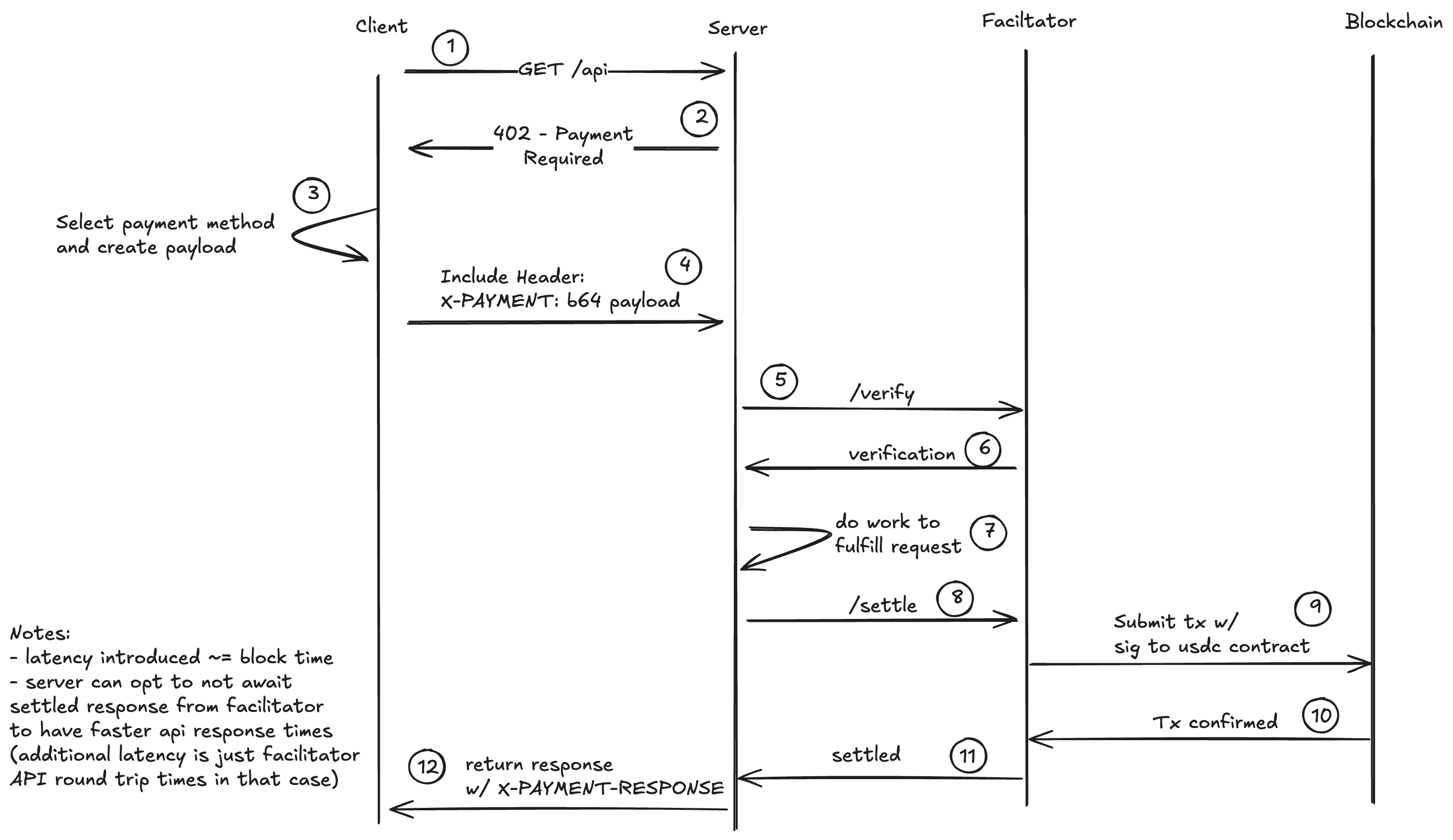
Imagine an AI agent querying a language model for insights. The server responds with 402, embedding payment details in the header. The agent executes the transfer onchain, retries with proof, and accesses the resource instantly. This dance happens machine-to-machine, at scale, across blockchains. No logins, no credit cards, no middlemen. From my vantage as an investment analyst who’s seen rigid structures stifle growth, this feels like a fundamental upgrade: precise cost allocation mirrors value creation directly, much like dividends rewarding patient capital.
HTTP 402’s Redemption Arc in Agentic Commerce
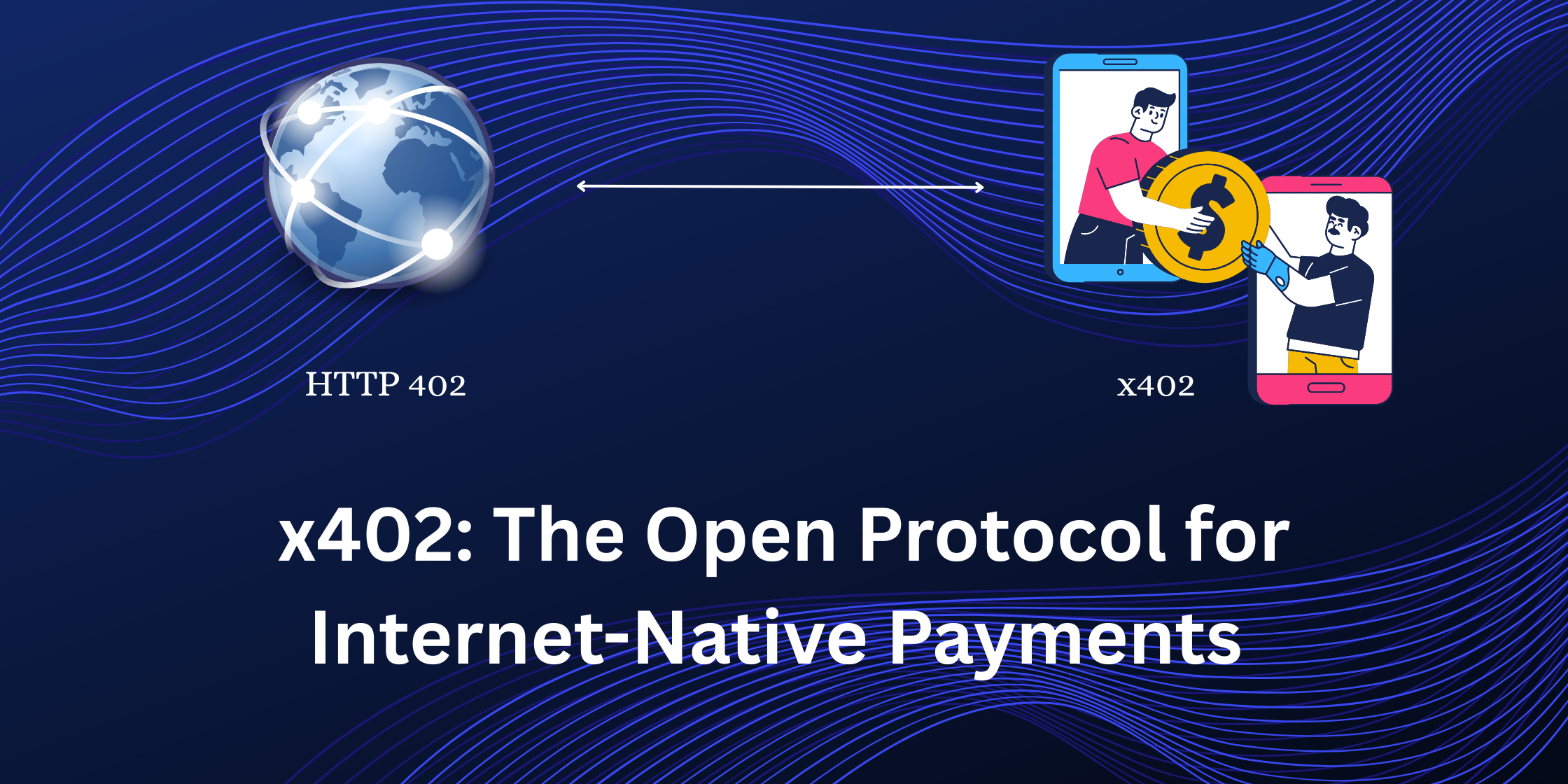
Defined in the original HTTP spec but never popularized, 402 languished as a placeholder. x402 resurrects it with machine-readable semantics, turning every API endpoint into a potential paywall. Servers specify amount, token, chain, and wallet in standardized headers. Agents parse, pay via wallets like Coinbase’s AgentKit, and proceed. It’s blockchain-agnostic, supporting USDC on Base, Stellar, or beyond. Platforms like Router402 aggregate models behind one endpoint, charging per call on Base. This isn’t hype; it’s infrastructure for AI-driven commerce where agents roam the web, transacting autonomously.
x402 Server Example: HTTP 402 Micropayment Challenge for AI Inference
The x402 protocol leverages the rarely used HTTP 402 “Payment Required” status code to request micropayments directly in the payment challenge header. This enables AI agents to autonomously handle billing for API inference. Below is an educational example of a server implementation using Python Flask:
from flask import Flask, request, Response, jsonify

app = Flask(__name__)

@app.route('/generate', methods=['POST'])
def generate():
    prompt = request.json.get('prompt')
    # Simulate inference cost
    cost = 0.001  # e.g., USD equivalent in sats

    # Check for payment proof
    payment_proof = request.headers.get('X-Payment-Proof')
    if not payment_proof or not verify_payment(payment_proof, cost):
        headers = {
            'WWW-Authenticate': f'402 payment="{cost} USD", invoice="lnp1...", method="lnurlp"'
        }
        return Response('Payment Required for AI Inference', status=402, headers=headers)

    # Process inference (placeholder)
    result = f"AI-generated response to: {prompt}"
    return jsonify({'result': result})

def verify_payment(proof, cost):
    # In production: verify Lightning preimage or payment hash against invoice
    return proof == 'valid_preimage'  # Placeholder

if __name__ == '__main__':
    app.run(debug=True)
Upon receiving a 402 response, an autonomous AI agent parses the WWW-Authenticate header to retrieve payment details (e.g., Lightning invoice), completes the micropayment via an integrated wallet, and retries the request including an X-Payment-Proof header (e.g., payment preimage) for verification. This eliminates subscriptions and enables pay-per-use inference.
Critics might dismiss crypto volatility, but stablecoins neutralize that. Settlement layers like Stellar now underpin x402, ensuring low fees and speed. Developers win with 402 payments developers tools that integrate via simple middleware. No more overprovisioning servers for bursty AI workloads; bill exactly for compute cycles, inferences, or milliseconds. This granular control echoes conservative portfolio strategies: diversify risks, capture upside precisely.
Escaping the Subscription Trap for AI API Pay Per Call
Subscriptions made sense for streaming video, but AI inference defies averages. A developer might need 10,000 calls one day, zero the next. Flat fees breed waste; AI API pay per call aligns incentives. x402 slashes friction: payments settle in seconds, often under a cent. Usage-based billing surges in digital services, per industry reports, charging per API hit or token generated. Yet legacy systems falter on micropayments due to fees. Blockchain flips this, with x402 proving viable economics at sub-penny levels.
Micropayment Fees: Traditional Processors (e.g., Visa) vs. Stellar x402
| Payment Amount | Traditional Processors (e.g., Stripe: 2.9% + $0.30) | Stellar x402 |
|---|---|---|
| $0.001 | $0.30 (30,000%) | < $0.0001 (< 10%) |
| $0.01 | $0.30 (3,000%) | < $0.0001 (< 1%) |
| $0.10 | $0.303 (303%) | < $0.0001 (< 0.1%) |
| $1.00 | $0.329 (33%) | < $0.0001 (< 0.01%) |
| Minimum Supported | $1+ (uneconomical below) | $0.001 |
Consider the economics. Traditional processors gouge on tiny transactions; x402 leverages layer-2 efficiency. An agent pays $0.001 for an embedding, scales to millions without proportional overhead. Providers forecast revenue accurately, users avoid unused quotas. From an investment lens, this unlocks sustainable growth: recurring precision over lumpy contracts. Early adopters like Cloudflare and Google Cloud signal maturity; their integrations pave highways for metered billing AI services.
Building Blocks Powering x402 Adoption
Support snowballs. Coinbase’s x402 launch enables instant stablecoin flows over HTTP. Dynamic. xyz simplifies onchain plumbing. Allium. so and Formo. so tout agent-native micropayments. Simplescraper offers guides for paywalls. Wu Blockchain notes the pivot to per-inference charges. This ecosystem empowers developers to retrofit APIs effortlessly. Tools like Router402 multiplex LLMs, settling USDC per inference. Blockchain flexibility means no vendor lock-in; swap networks as liquidity shifts. Patience here pays dividends, as protocols mature into standards.
Adoption accelerates as infrastructure solidifies. Cloudflare and Google Cloud back x402, embedding it into their edge networks for global scale. Router402 stands out, funneling access to diverse language models via one pay-per-call endpoint on Base, settling USDC micropayments effortlessly. Coinbase’s AgentKit natively handles these flows, letting developers focus on logic over ledgers. This convergence signals a tipping point: 402 protocol micropayments aren’t fringe anymore; they’re the rails for agentic economies.
Developer Advantages in Pay-Per-Inference AI APIs
For builders, x402 democratizes monetization. Retrofit any API with middleware that injects 402 responses, specifying stablecoin amounts down to fractions of a cent. No SDK overhauls; HTTP headers carry the payload. Agents equipped with wallets like those from Dynamic. xyz parse and pay autonomously. This unlocks pay per inference AI APIs for niche services: vision models, embeddings, or custom fine-tunes. Revenue streams emerge from idle endpoints, billed precisely for electrons moved. As someone who’s modeled cash flows for decades, I see parallels to options pricing, capture volatility without bearing it fully.
Key x402 Advantages for Developers
-
Granular Billing: Enables micropayments as low as $0.001 per API call or AI inference, supporting precise pay-per-use models without minimums.
-
No Subscriptions: Eliminates recurring fees, shifting to usage-based billing for APIs, agents, and services like language models.
-
Blockchain Agnostic: Supports any stablecoin or network, including USDC on Base, Stellar, and others, without vendor lock-in.
-
Instant Settlement: Leverages HTTP 402 for machine-readable payments with immediate onchain confirmation via stablecoins.
-

Easy Integration: Native support in Coinbase AgentKit, Cloudflare, Google Cloud, and Router402; simple HTTP flow for developers.
Scalability follows. High-volume inference runs settle in bulk or singly, fees vanishing into layer-2 noise. Providers predict cash flows from usage telemetry, smoothing capex decisions. Users experiment freely, paying only for output. This efficiency curbs the subscription trap, where 70% of plans gather dust in AI tooling, per usage analytics I’ve reviewed.
Navigating Challenges in Metered Billing AI Services
No protocol escapes hurdles. Wallet adoption lags for non-crypto natives, though AgentKit bridges that. Regulatory scrutiny on stablecoins persists, but USDC’s reserves mitigate risks. Latency in settlements? Layer-2s like Base clock under seconds. Interoperability shines as x402 stays chain-neutral, dodging silos. Early friction yields to tools: Simplescraper’s guides demystify paywalls, Stellar’s settlement layer crushes costs. Investors note: these are surmountable, much like internet protocols weathered dial-up eras.
Real-world traction builds conviction. Platforms aggregate inferences across providers, arbitraging costs via x402. Agents chain calls, research, summarize, act, each settled independently. This composability fuels emergent apps: autonomous traders scanning markets, creators generating assets on demand. From a value investing perch, x402-backed firms merit watchlists; their moats lie in network effects, not proprietary models.
The Road Ahead for AI API Pay Per Call
Picture 2030: APIs as vending machines, agents feeding stablecoins for intelligence. x402 standardizes this, much as TCP/IP unified nets. Developers flock to 402 payments developers kits, enterprises migrate to metered billing AI services. Volatility? Stablecoins anchor. Centralization? Decentralized ledgers distribute trust. My portfolio lens spots asymmetric upside: low entry barriers, viral adoption curves. Early positions in enabling protocols could compound like early cloud bets.
Patience indeed pays dividends. As AI agents proliferate, x402 equips the plumbing for a micropayment flood. Providers thrive on precision, users on fairness. This shift from blunt instruments to scalpel billing redefines the AI economy, one inference at a time.