
What is the 402 payment status code
The HTTP 402 status code was originally defined in RFC 7231 as a reserved response code intended for future use, specifically noting it was "reserved for future use" for payment-related transactions. While never widely adopted by traditional web merchants, the code has been repurposed by the x402 protocol to facilitate machine-to-machine (M2M) billing for AI agents.
In the x402 ecosystem, the 402 status code serves as a signal that a resource is protected and requires payment before access is granted. Unlike traditional payment flows where a user manually enters credit card details, x402 enables AI agents to automatically respond to a 402 challenge with a cryptographic proof of payment. This mechanism allows for instant, frictionless transactions between software entities without human intervention.
The x402 specification defines how agents should handle these responses, ensuring that payments are verified before the requested data or service is delivered. This approach shifts the billing model from subscription-based or manual checkout flows to a pay-per-use, atomic transaction model. The protocol is designed to be lightweight, leveraging existing HTTP infrastructure to support a new layer of economic activity for autonomous agents.
While the concept of machine-to-machine payments is gaining traction, the 402 status code remains a specific implementation within the x402 framework. It is not a universal standard for all AI payments, but rather a targeted solution for HTTP-based interactions. As the M2M economy grows, the 402 code may become a familiar sight in the logs of AI-driven systems, marking the transition from human-centric to agent-centric commerce.
How x402 enables agent billing
The x402 protocol transforms the standard HTTP 402 Payment Required status code into a functional billing layer for artificial intelligence. Rather than relying on manual checkout flows, the protocol allows AI agents to negotiate and settle payments directly through machine-to-machine communication. This mechanism supports a decentralized economy where software entities manage complex workflows and value exchange without human intervention.
The process follows a structured sequence of authentication, negotiation, and settlement. Each step is designed to ensure that the requesting agent has the necessary credentials and funds before access is granted to the service.
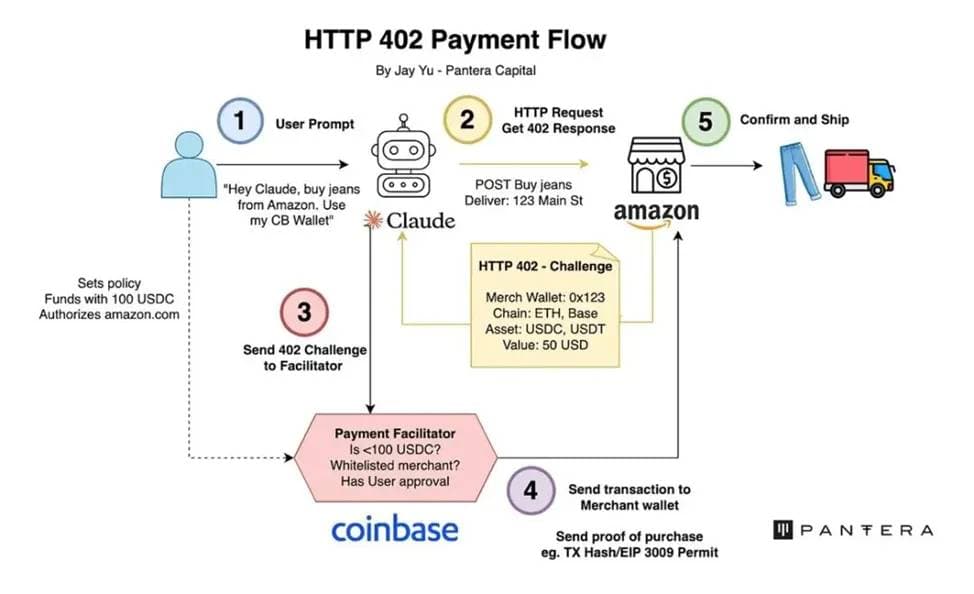
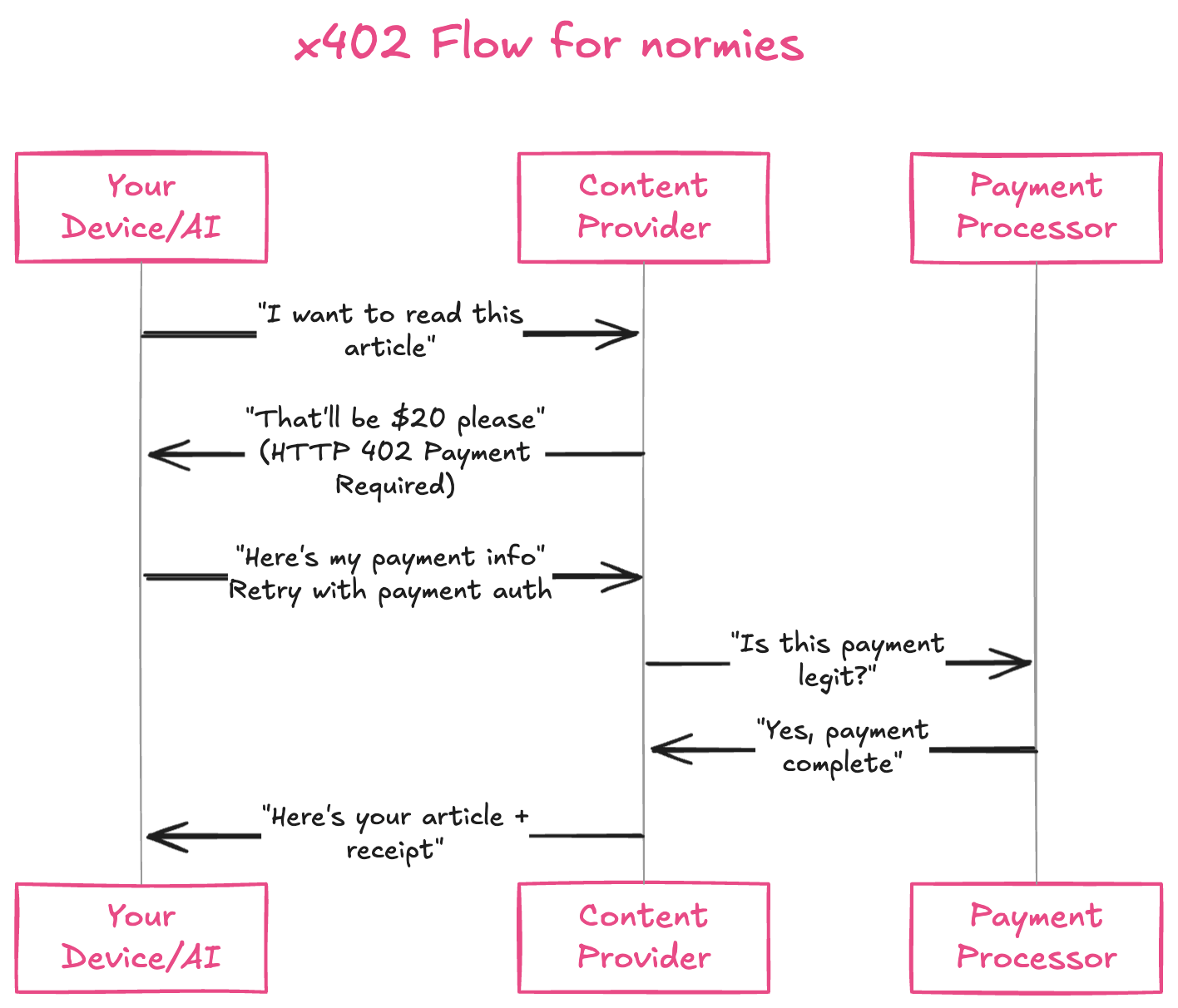
This architecture reduces friction in the machine-to-machine economy by removing the need for traditional payment gateways. As noted by Nevermined, x402 provides a streamlined infrastructure for AI agent billing, allowing developers to integrate payments directly into their service logic. Similarly, FluxaPay highlights that this system operates on four key layers: identity, wallet, authorization, and the payment rail, ensuring that autonomous payments are both secure and efficient.
The protocol's design aligns with emerging standards for AI agent payments, as described by Chainlink. By embedding financial transactions into the request-response cycle, x402 enables a more responsive and automated digital marketplace. This approach is particularly relevant for high-frequency interactions where human oversight would be impractical or cost-prohibitive.
Comparing AI 402 Pay to traditional gateways
Use this section to make the AI 402 Pay decision easier to compare in real life, not just on paper. Start with the reader's actual constraint, then separate must-have requirements from details that are merely nice to have. A practical choice should survive normal use, maintenance, timing, and budget. If a recommendation only works in an ideal situation, call that out plainly and give the reader a fallback path.
| Factor | What to check | Why it matters |
|---|---|---|
| Fit | Match the option to the primary use case. | A good deal still fails if it does not fit the job. |
| Condition | Verify age, wear, and service history. | Hidden condition issues erase upfront savings. |
| Cost | Compare purchase price with likely upkeep. | The cheapest option is not always the lowest-cost option. |
Compliance and security considerations
The x402 protocol introduces machine-to-machine billing as an open standard, aiming to support both cryptocurrency and fiat networks while maintaining internet-native payment structures. This shift from human-mediated transactions to autonomous agent interactions requires rigorous compliance frameworks to prevent unauthorized spending and identity spoofing. As AI agents negotiate and settle payments without direct intervention, the security model must shift from user authentication to cryptographic verification of agent identity and wallet authorization.
Identity verification in this ecosystem relies on the x402 specification, which defines how agents prove their legitimacy before initiating a transaction. Unlike traditional e-commerce, where a human confirms a purchase, AI agents must cryptographically sign requests using private keys tied to their digital wallets. This process ensures that only authorized agents can spend funds, reducing the risk of fraud from compromised user accounts. The protocol’s design, as discussed by industry leaders like Nemil Dalal from Coinbase, emphasizes that security is built into the transaction layer rather than added as an afterthought.
Fraud detection in autonomous payments depends on real-time audit trails and network monitoring. Since transactions occur at machine speed, manual review is impossible, making automated anomaly detection essential. The x402 standard supports this by logging every payment request and settlement on-chain or through approved fiat rails, providing a transparent record for compliance audits. This transparency helps regulators and businesses track spending patterns and identify suspicious activity, such as repeated failed attempts or unusual transaction volumes.
While AI-driven checkout systems are generally considered secure due to encryption and tokenization, the autonomous nature of AI agent payments introduces new attack vectors. Malicious actors may attempt to hijack agent wallets or exploit vulnerabilities in the negotiation logic. To mitigate these risks, developers must implement strict access controls and regular security audits. The x402 protocol’s open-source nature allows the community to review and improve its security features, fostering a more resilient ecosystem for machine-to-machine commerce.
-
Verify agent identity via cryptographic signatures
-
Ensure wallet authorization is strictly enforced
-
Maintain immutable audit trails for all transactions
-
Implement real-time fraud detection algorithms
Common questions about AI agent payments
Is AI Pay safe?
AI-driven checkout systems are designed with security protocols that verify transactions before they settle. According to PayPal’s security guide, these systems generally provide a secure environment for digital payments by leveraging existing encryption and authentication standards. However, the x402 protocol itself relies on specific HTTP status codes to enforce payment requirements, meaning security depends heavily on proper implementation by the service provider.
How do AI agents pay?
AI agents execute financial transactions autonomously, negotiating terms, authorizing payments, and settling debts without direct human intervention. This process enables a machine-to-machine economy where software manages complex workflows and value exchange. As noted in Chainlink’s analysis of AI agent payments, this autonomy allows agents to operate dynamically, requesting and paying for external services on demand to complete tasks efficiently.
Where can I buy X402 protocol?
The X402 token is available for purchase through Coinbase. Users can acquire it by executing a decentralized exchange (DEX) trade directly on the platform. This provides a straightforward entry point for those looking to participate in the machine economy layer that powers x402-enabled AI agents.
No comments yet. Be the first to share your thoughts!