
What is AI 402 Pay
AI 402 Pay, technically known as the x402 protocol, is an open payment standard designed specifically for artificial intelligence agents. Instead of humans manually entering credit card details or approving wire transfers, x402 allows software to pay for digital goods and services autonomously using the HTTP 402 status code. This creates a direct machine-to-machine financial layer on the web.
The protocol was developed by Coinbase and released as open source in 2025. It enables AI agents to hold stablecoin wallets and execute transactions instantly when they encounter a 402 response from a server. This removes the friction of traditional payment gateways, which are often too slow or costly for micro-transactions between bots.
For small and medium-sized enterprises (SMEs), this shift is significant. It transforms how businesses monetize APIs, data feeds, and automated services. By integrating x402, companies can accept payments from AI agents without building complex billing infrastructure, reducing overhead and enabling new business models where software pays for software.
Estimate your monthly savings with AI 402 Pay
Manual invoice processing drains small business resources. The average small business spends $12 to $15 processing each paper invoice, covering data entry, matching, and approval delays. AI 402 Pay automates this workflow, reducing the cost per invoice to a fraction of that amount. Use the calculator below to see how much time and money your team could save by switching to automated processing.
These savings compound quickly. Beyond direct cost reductions, automated processing eliminates late payment penalties and captures early-payment discounts that manual teams often miss. The calculator reflects direct transaction costs; actual savings may be higher when accounting for reduced administrative overhead and improved cash flow.
AI 402 Pay vs traditional AP systems
Traditional accounts payable (AP) relies on heavy infrastructure: manual data entry, bank transfers, and reconciliation software like Stripe or legacy ERP modules. These systems treat payments as separate, batched events that require human verification. AI 402 Pay changes this by embedding the payment directly into the API response via the 402 status code. This allows AI agents to settle micro-transactions instantly without leaving the execution loop.
The difference is most visible in cost and speed. Traditional AP involves fixed processing fees per transaction, which kills profitability for small, frequent AI calls. AI 402 Pay enables granular, per-request billing. Instead of waiting for a monthly invoice, the system captures payment proof at the exact moment of service delivery, reducing administrative overhead and eliminating the need for complex reconciliation workflows.
To visualize the operational gap, consider how each system handles a typical high-volume AI task.
| Feature | Traditional AP | AI 402 Pay |
|---|---|---|
| Billing Model | Monthly batch invoices | Per-request micro-billing |
| Processing Speed | 1-3 business days | Real-time (milliseconds) |
| Manual Effort | High (data entry, matching) | Low (automated proof) |
| Integration Complexity | High (ERP connectors) | Medium (API standard) |
| Cost Structure | Fixed fee per transaction | Variable, usage-based |
While traditional systems offer broad compatibility with existing banking networks, they introduce latency that AI workflows cannot tolerate. AI 402 Pay requires a shift in how SMEs account for software costs, moving from capital-heavy infrastructure to operational expense models. For businesses running thousands of AI calls daily, this shift turns a logistical burden into a streamlined utility.
How AI agents process invoices
An AI agent handles invoice processing through a fully autonomous workflow, removing human intervention from the payment loop. By leveraging the x402 protocol, the agent can request services, execute payment, and receive results without manual approval. This automation is the core mechanism that allows automated invoice processing to cut costs for SMEs by eliminating administrative overhead.
The process begins when the AI agent identifies an incoming invoice that requires verification. Instead of flagging it for a human accountant, the agent initiates a request to an external processing service. This service acts as a specialized node in the agent's network, ready to receive structured data and return accurate insights.
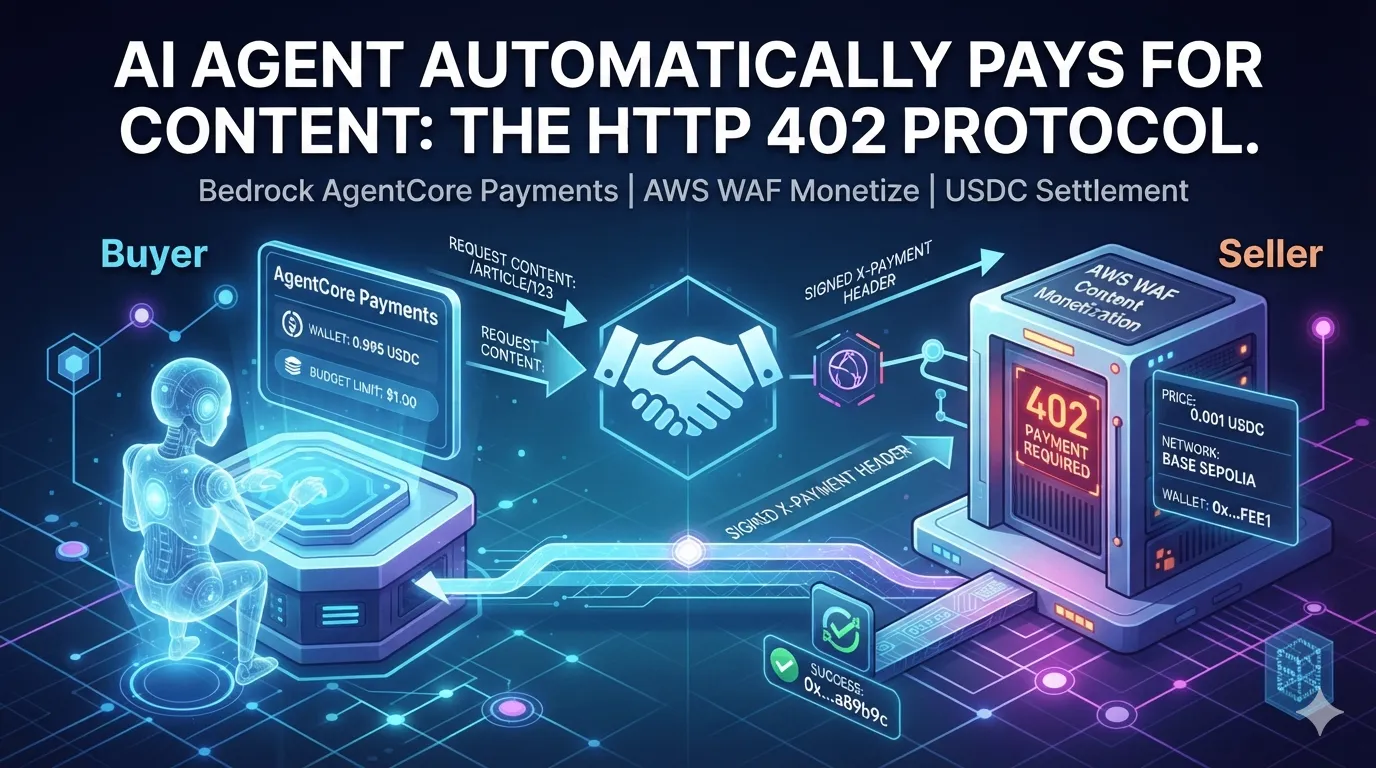
The agent formats the invoice data into a structured payload, typically JSON or XML. It sends this payload to the processing service's endpoint. The request includes specific instructions on what data points to extract, such as vendor details, line items, and total amounts. This step ensures the service receives exactly what it needs to perform its task.
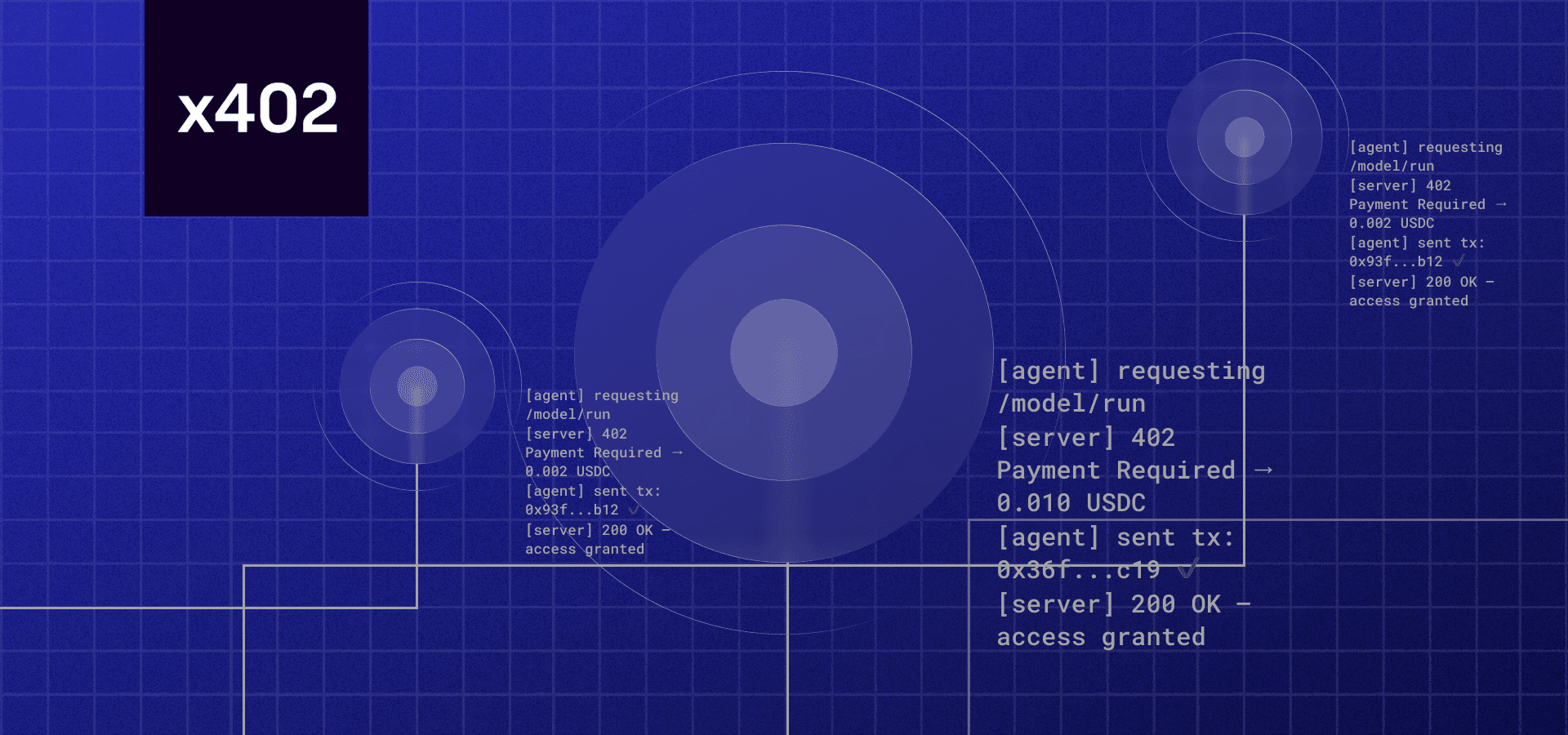
The agent receives an HTTP 402 response, which signals that payment is required to access the service. This is not a block; it is a payment gate. The response includes a payment instruction detailing the cost of the processing job. The agent verifies the cost against its budget parameters to ensure the expense is justified before proceeding.

Once approved, the agent executes a micropayment using the x402 protocol. This transaction happens instantly on-chain, transferring the exact amount owed to the service provider. The payment is atomic, meaning it either completes fully or fails entirely, preventing partial payments or stuck transactions. This transparency builds trust between the agent and the service.
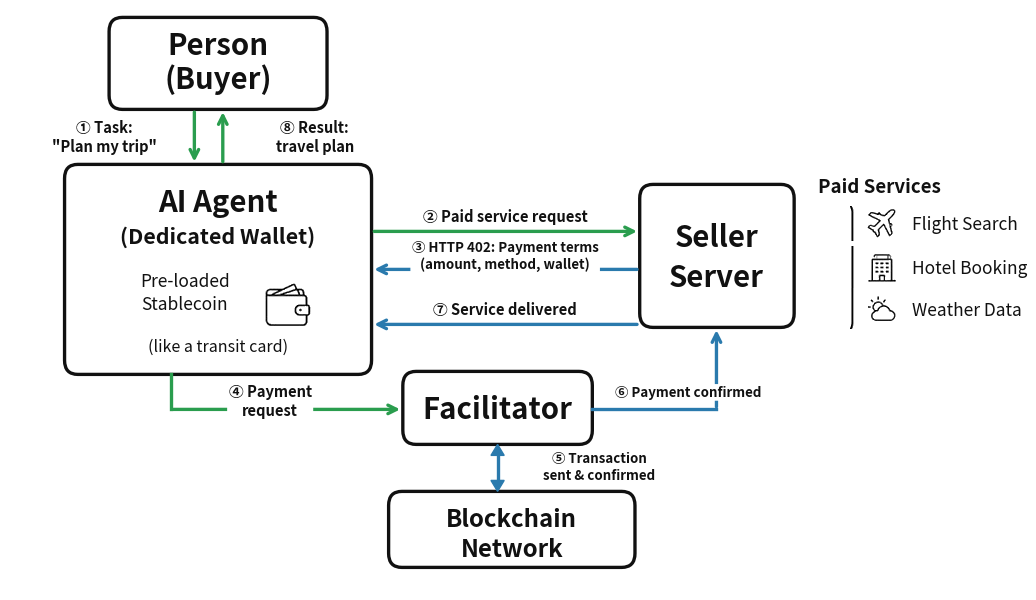
After payment confirmation, the agent receives the processed data. The service returns structured information, such as extracted text, tables, and contact details. The agent validates this data against its internal records. If the extraction is accurate, the agent proceeds to update the accounting system. If errors are detected, it can flag the invoice for human review.
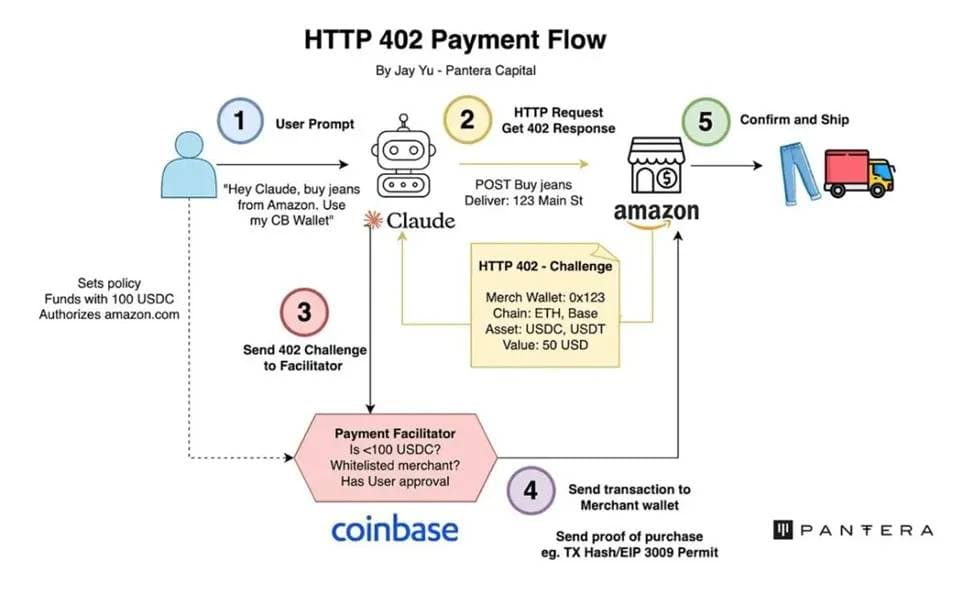
The final step is integrating the verified data into the SME's financial records. The agent creates the corresponding ledger entries, schedules the payment to the vendor if necessary, and archives the invoice for compliance. This closes the loop, ensuring the invoice is fully processed and accounted for without any manual data entry.
This workflow transforms invoice processing from a manual, error-prone task into a seamless, automated operation. By paying only for successful processing, SMEs avoid wasting resources on failed attempts. The x402 protocol ensures that every transaction is traceable and secure, making it a reliable foundation for AI-driven financial operations.
Implementation checklist for AI 402 Pay
Adopting AI 402 Pay requires shifting from traditional card-on-file models to a protocol where your AI agents hold stablecoins and pay directly via HTTP 402 responses. For SMEs, this means setting up digital wallets, integrating the x402 SDK, and testing with low-value transactions before scaling to full invoice automation.
- Set up a dedicated wallet: Use a non-custodial wallet to hold the stablecoins (like USDC) your AI agents will use for payments. Fund it with a small reserve to cover initial test invoices.
- Integrate the x402 SDK: Add the open-source x402 library to your invoice processing pipeline. This allows your system to listen for 402 responses from vendors and automatically trigger the crypto payment.
- Test with low-value invoices: Run a pilot with a few internal or low-risk vendor invoices. Verify that the AI agent can parse the payment request, sign the transaction, and confirm receipt on-chain.
- Scale to full automation: Once the pilot succeeds, expand AI 402 Pay to all eligible invoices. Monitor transaction fees and settlement times to ensure the cost savings outweigh the operational overhead.
Common questions about AI 402 Pay
Where can I buy x402 protocol?
You can buy X402 directly through Coinbase using a DEX trade. This provides a straightforward entry point for SMEs looking to integrate the protocol into their existing financial infrastructure.
Is AI Pay safe?
AI-driven checkout systems are designed with security as a priority. As these systems become more common, they incorporate advanced encryption and verification layers to ensure that automated transactions remain secure and protected against fraud.
How does x402 differ from Stripe?
While Stripe handles traditional merchant payments, x402 is an open standard built specifically for machine-to-machine interactions. It allows AI agents to autonomously negotiate and execute cryptocurrency payments without human intervention, streamlining B2B workflows.
No comments yet. Be the first to share your thoughts!