
What is AI 402 Pay
AI 402 Pay, formally known as the x402 protocol, is a technical standard that enables artificial intelligence agents to pay for digital content or API calls directly over the internet. It builds upon the existing HTTP protocol by leveraging the 402 Payment Required status code. This mechanism allows machines to negotiate and settle micropayments in cryptocurrency without human intervention, creating a functional "machine economy" where agents can autonomously purchase data, compute power, or exclusive insights.
Traditionally, accessing premium online content requires a human to log in, enter credit card details, and approve transactions. AI agents lack these biological and financial constraints. x402 solves this by embedding payment logic into the server response. When an agent requests a resource, the server can respond with a 402 status code, specifying the required cryptocurrency and the wallet address for payment. Once the agent verifies and submits the transaction on-chain, the server grants access to the requested data.
This approach removes the friction of traditional payment gateways, which are often too slow or expensive for small transactions. By using blockchain networks for settlement, x402 enables instant, atomic exchanges for micropayments. For example, an AI agent analyzing market trends might pay a fraction of a cent to access a specific financial dataset, or a creative bot might purchase a single image generation token. This shifts the internet from a human-centric advertising model to a machine-centric utility model.
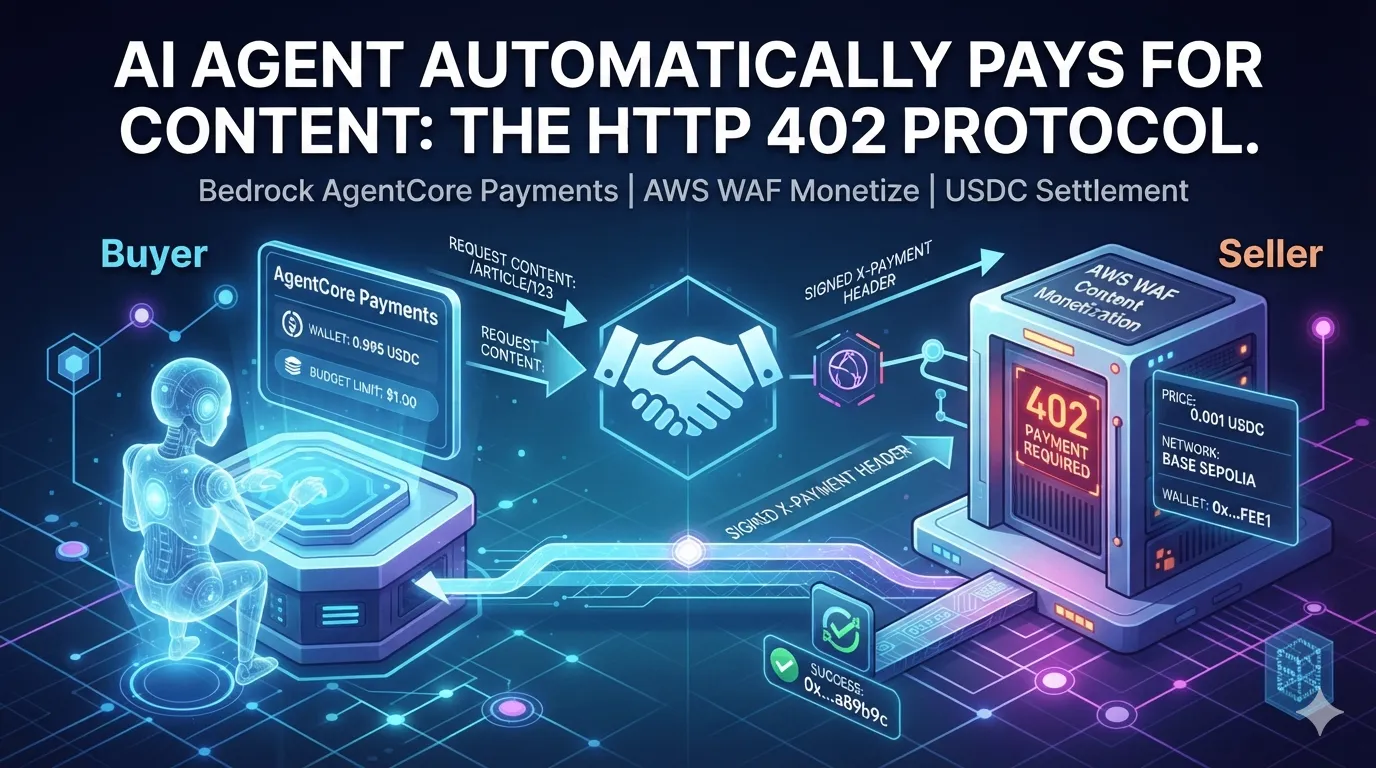
How x402 Handles Agent Billing
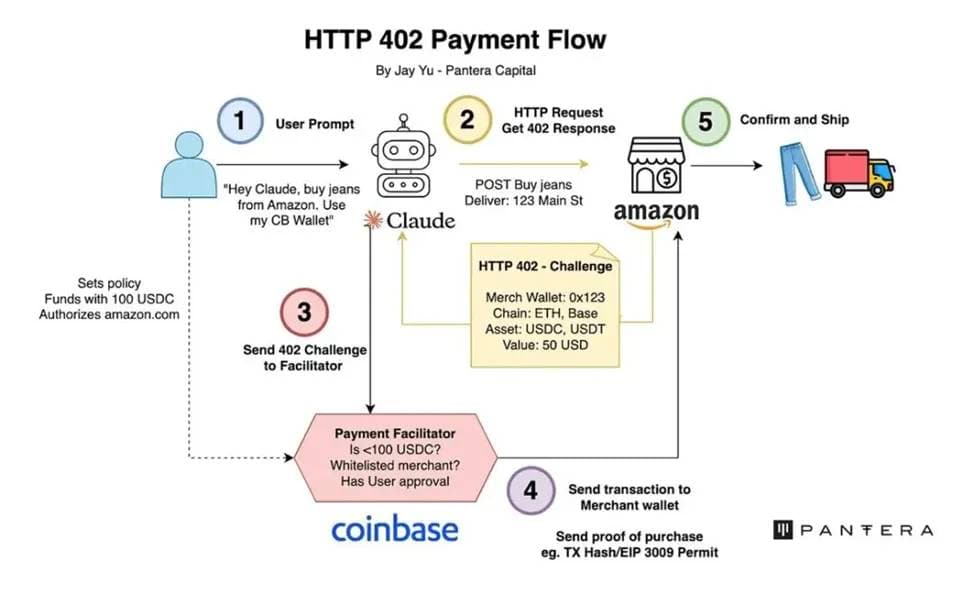
x402 turns the standard HTTP 402 Payment Required status into a programmable handshake. Instead of a static error page, the server returns a 402 response containing a cryptographic challenge. This challenge acts as a lock, requiring the client to prove payment before the resource is released. For AI agents, this mechanism replaces manual invoicing with automated, machine-to-machine settlement.
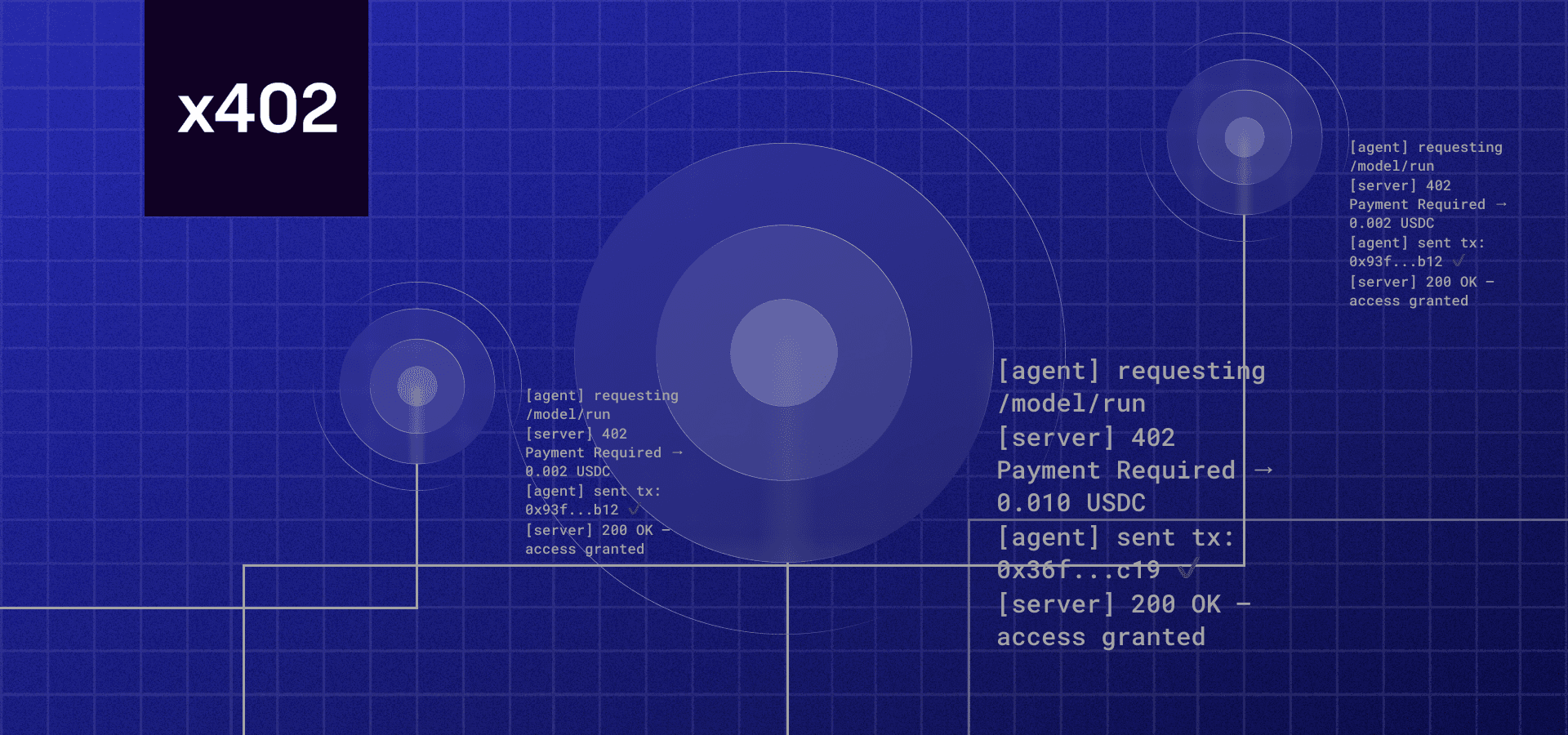
The process begins when an agent requests a resource, such as a data API or a computation service. The server detects that no valid payment exists and responds with a 402 status. Crucially, this response includes a specific payload: the details of the transaction the agent must sign. This payload typically includes the recipient address, the amount, and a unique nonce to prevent replay attacks.
The agent receives the challenge and uses its private key to sign the transaction data. This signature proves that the agent has authorized the transfer of funds. The agent then broadcasts this signed transaction to the blockchain network. Once the transaction is confirmed on-chain, the agent sends the proof back to the server.
The server verifies the signature and checks the blockchain for confirmation. If the payment is valid and unspent, the server unlocks the resource. This entire cycle happens in seconds, allowing agents to purchase small amounts of compute or data on demand. It creates a frictionless economy where services are paid for instantly and automatically, without human intervention or traditional payment gateways.
AI 402 Pay vs Traditional Gateways
Traditional payment processors like Stripe and PayPal were built for human shoppers buying physical goods. They rely on batch settlements and high minimum thresholds to remain profitable. This architecture creates friction for AI agents, which operate in a "machine economy" where transactions are frequent, automated, and often tiny.
The x402 protocol changes this dynamic by treating payments as a first-class citizen in the request-response cycle. Instead of redirecting to a checkout page, the AI agent pays directly to use the API response. This allows for granular billing that traditional gateways simply cannot support.
Fee Structures and Minimums
Stripe typically charges a flat fee (e.g., $0.30) plus a percentage per transaction. For a $0.05 API call, that fee represents a 600% overhead, making micropayments economically impossible. PayPal has similar barriers, with minimum transaction amounts that often exceed the value of the data being exchanged.
x402 leverages blockchain infrastructure, where transaction costs can be fractions of a cent on layer-2 networks. This means an AI agent can pay $0.01 for a token of text or a single calculation without the fee exceeding the value of the service. The cost structure scales linearly with value, not against it.
Automation and Settlement
Traditional gateways require manual intervention for disputes, chargebacks, and reconciliation. For AI agents operating autonomously, this is a bottleneck. x402 integrates payment verification directly into the code flow. The API endpoint checks for payment before returning data, enabling instant, permissionless settlement.
Comparison: x402 vs. Stripe for AI Agents
The following table highlights the structural differences between legacy processors and the x402 protocol for agentic use cases.
| Feature | Stripe/PayPal | x402 Protocol |
|---|---|---|
| Minimum Transaction | > $0.50 | $0.001+ |
| Fee Structure | $0.30 + 2.9% | Network gas fees |
| Settlement Speed | 2-3 business days | Instant (on-chain) |
| Automation Level | Manual/Redirect | Code-integrated |
| Best For | Human B2C/B2B | Machine-to-Machine |
Real-World Micropayment Use Cases
The median payment by agents using x402 is between $0.01 and $0.10, according to recent research. This volume of small transactions is unviable on traditional rails but essential for scaling AI services. For example, an agent might pay $0.02 for a single LLM inference or $0.05 for a real-time weather update.
This shift enables new business models where AI agents act as economic actors themselves. They can buy, sell, and trade data services autonomously, creating a high-frequency market for digital goods that traditional gateways are structurally unable to facilitate.
Real-World Agent Payment Examples
The theoretical framework of machine-to-machine commerce becomes tangible when observing actual agent behavior on-chain. Data from Brownstone Research indicates that the median payment by agents using x402 sits between $0.01 and $0.10, with 76% of transactions falling within this range. This confirms that the primary use case for AI 402 pay is not large-scale enterprise settlement, but rather high-frequency micropayments for granular services.
Agents operate as economic actors, executing tiny transactions to access specific resources without human intervention. Below are three common scenarios where this protocol mechanics enable seamless value transfer.
Common AI Agent Payment Scenarios
-
API Access for LLM Calls
Agents pay per-token or per-request to external language models, settling fees instantly via x402 to unlock inference capacity. -
Compute Market Rent
Autonomous bots rent GPU slices for training or inference, paying micro-fees for precise compute time rather than long-term contracts. -
Data Licensing Fees
Data providers receive automatic micropayments when agents query or download specific datasets, ensuring creators are compensated for every use.
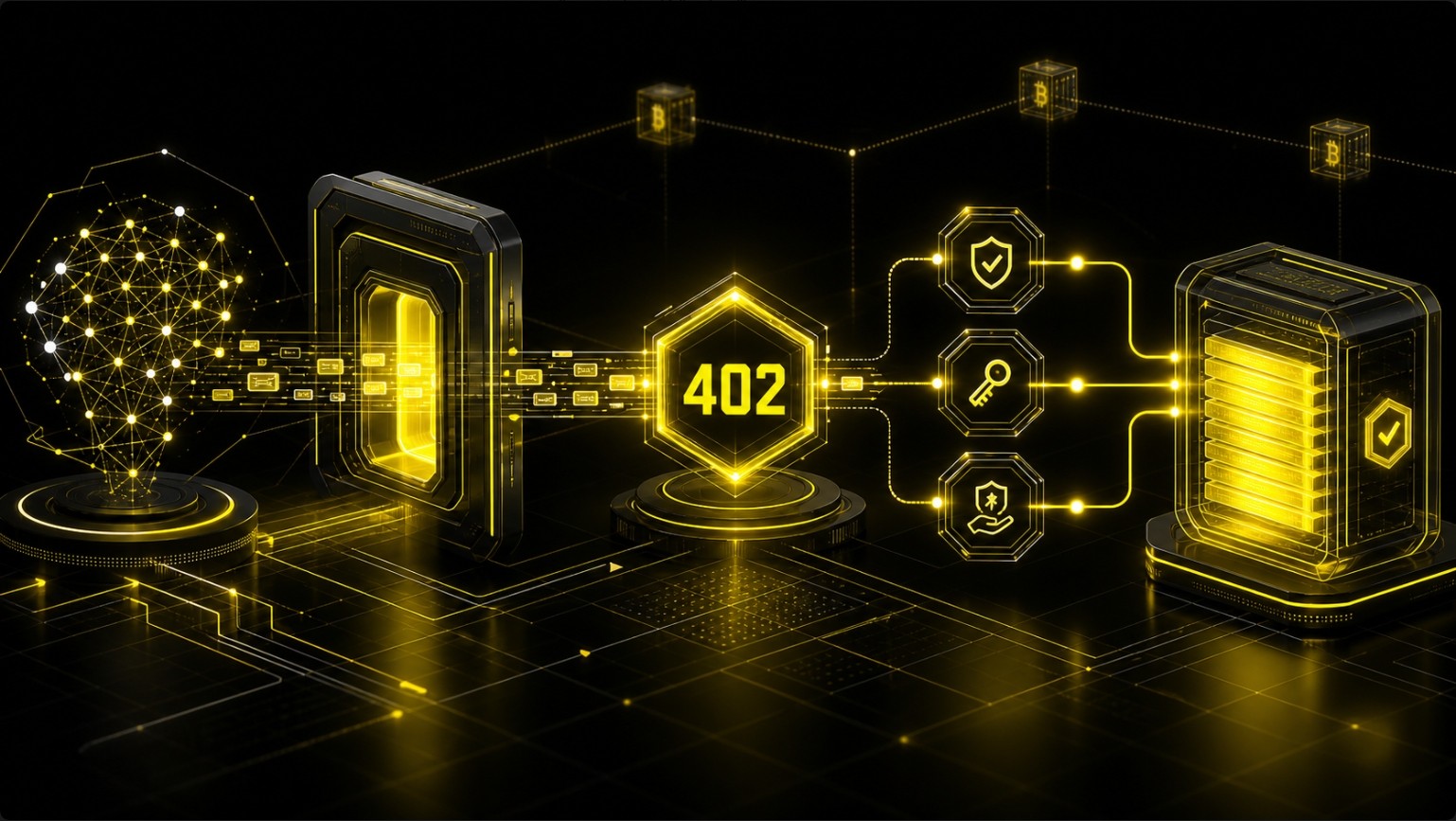
These examples illustrate the "machine economy" in action. By removing the friction of traditional payment gateways, x402 allows agents to treat data, compute, and API access as commoditized inputs, priced and paid for in real-time. This efficiency is what distinguishes agentic payments from conventional digital transactions.
Challenges in Machine-to-Machine Payments
As autonomous agents begin executing micropayments on chain, three structural hurdles remain: wallet management, gas fees, and security. These aren't just technical glitches; they are the friction points that determine whether the "machine economy" remains a niche experiment or scales into a global infrastructure.
Wallet Management for Autonomous Agents
An AI agent cannot simply use a single hot wallet for all transactions. The risk of key compromise is too high. Instead, agents must utilize threshold signatures or account abstraction to manage keys securely. This allows the agent to sign transactions without ever exposing the private key in plaintext, enabling secure, automated payments for services like API calls or data retrieval.
Gas Fees and Transaction Costs
Micropayments are only viable if the transaction cost is lower than the value being exchanged. Paying $5 in gas for a $0.01 data query is economically impossible. This is why Layer 2 rollups and state channels are critical. They batch transactions off-chain and settle them on-chain in bulk, reducing the per-transaction cost to fractions of a cent. Without this efficiency, the machine economy collapses under its own overhead.
Security Risks and Smart Contract Vulnerabilities
Autonomous agents operate without human intervention, meaning a bug in their payment logic can lead to irreversible financial loss. Smart contracts must be formally verified and audited to ensure they handle edge cases correctly. Additionally, agents need rate limiting and budget caps to prevent runaway spending if an agent goes rogue or is exploited by a malicious actor.
The ecosystem is evolving rapidly to address these challenges. New protocols are emerging that combine zero-knowledge proofs for privacy with layer 2 scaling for cost-efficiency. As these tools mature, the friction in machine-to-machine payments will decrease, paving the way for a truly autonomous digital economy.
No comments yet. Be the first to share your thoughts!