

Get ai 402 pay right
Before you configure your API endpoints or integrate wallet libraries, you need to understand that HTTP 402 is no longer just a placeholder code. It is the active mechanism for machine-to-machine commerce. This protocol allows AI agents to pay for services instantly using stablecoins without human intervention. If you are building for this ecosystem, getting the prerequisites right prevents failed transactions and broken service chains.
The foundation of this system is the Coinbase Developer Platform (CDP). This is the official infrastructure that supports the x402 standard. You cannot simply "buy" the protocol; you must build on the tools that make it work. Start by creating a CDP account and generating an API key. This key authenticates your application when it requests payment details from a server.
You also need a funded wallet capable of handling USDC. Since most x402 payments settle in USDC, ensure your agent has a stablecoin balance ready. Do not wait until the first request to check your funds. A common mistake is configuring the payment logic before verifying that the wallet can actually sign and broadcast transactions on the Base network.
Finally, familiarize yourself with the HTTP 402 response structure. When an agent hits a paid endpoint, the server returns a 402 status with specific payment instructions. Your code must parse this response, extract the amount and destination address, and then retry the request with the payment attached. Skipping this parsing step is the most frequent cause of integration failure.
How to set up and use the x402 payment protocol
The x402 protocol changes how AI agents handle payments by embedding cost directly into the HTTP response. Instead of complex account setups or subscription forms, an agent receives a standard 402 Payment Required status code that includes the exact payment details. This allows microtransactions to happen instantly, typically using stablecoins like USDC on the Base network.
Follow these steps to understand the flow and set up the necessary components for your own integrations.

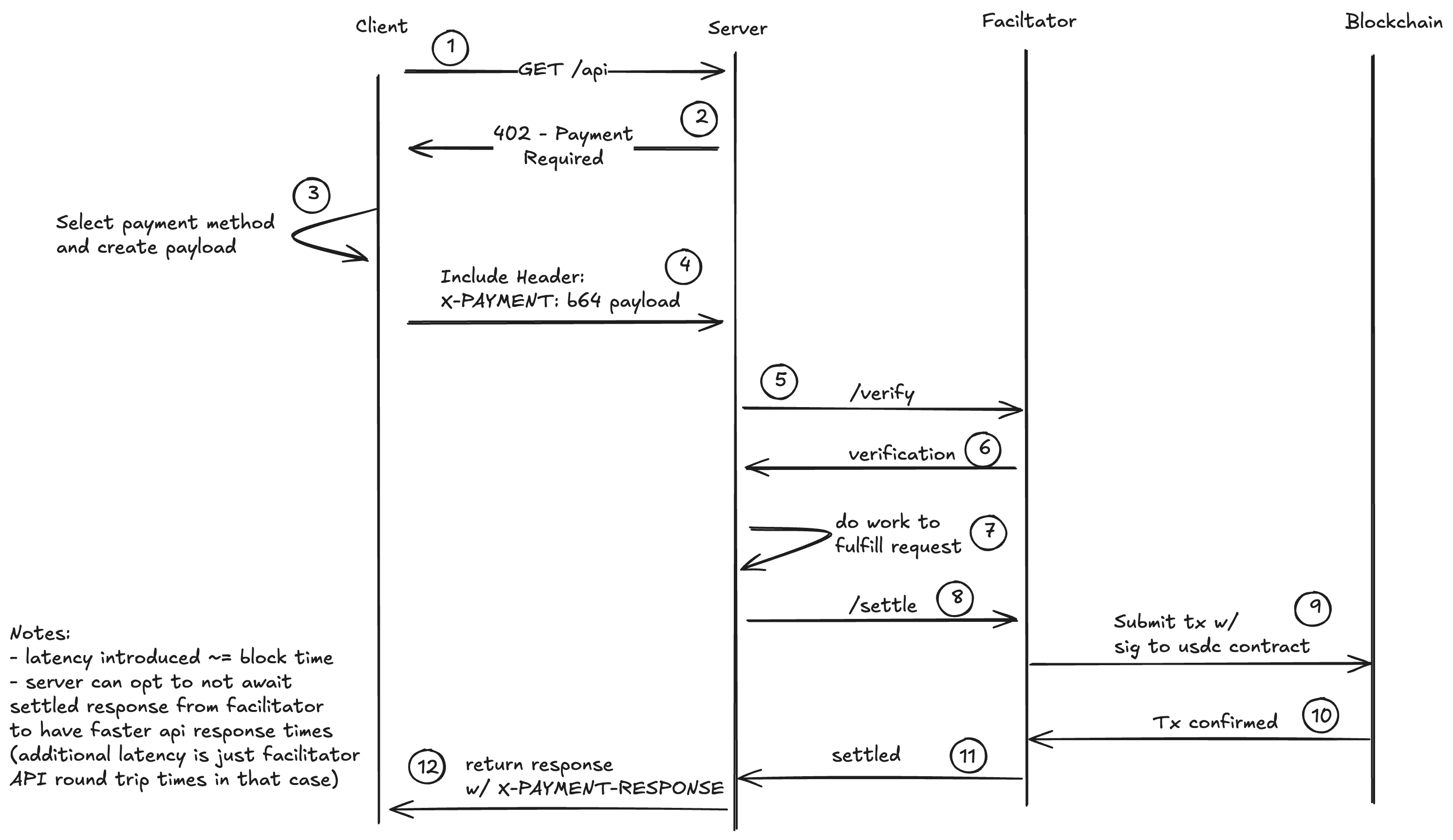
Your server must be programmed to detect when a resource requires payment. Instead of returning a 200 OK or a generic 403 Forbidden, the server returns HTTP 402 Payment Required. Crucially, the response body and headers must include the payment terms: the amount due, the currency (e.g., USDC), and the destination wallet address. This data is what the client agent reads to initiate the transaction.
AI agents need a digital wallet capable of holding and sending cryptocurrency. Most x402 implementations rely on USDC on the Base network due to low fees and speed. You can fund this wallet by purchasing USDC on a centralized exchange like Coinbase and withdrawing it to your agent’s wallet address, or by bridging assets from other networks. Ensure the wallet has enough balance to cover the expected transaction volume.

Your agent’s code must check for the 402 status code. When detected, the agent should parse the payment instructions from the response headers. It then signs a transaction using its private key, sending the specified amount of USDC to the destination address. This process happens automatically in the background without human intervention.

After the transaction is confirmed on the blockchain, the agent must modify its original request. It typically adds a payment proof token or a specific header (like x-payment-proof) to the HTTP request. The server verifies this proof against the blockchain record. Once validated, the server grants access to the resource and returns the expected 200 OK response with the data the agent requested.
Common mistakes in AI 402 pay implementation
Freelancers and developers often treat HTTP 402 as a simple "paywall" button, but the x402 protocol requires precise technical alignment to function correctly. Misconfiguring the response headers or misunderstanding the agent's retry logic are the most frequent causes of failed transactions. These errors don't just block revenue; they can break the automated workflow entirely.
Misinterpreting the 402 Response Structure
The HTTP 402 status code is not just an error; it is a structured payment request. A common mistake is returning a generic 402 without the required metadata. Agents need specific fields to know how much to pay, in which currency (usually USDC), and where to send it. Without this structured data, the agent cannot execute the payment and will either fail or hang.
Ignoring the Retry Mechanism
AI agents operate on a request-retry loop. If you return a 402, the agent pays and then retries the original request. A critical error is failing to validate the payment proof in the subsequent request. If your server does not check for the payment token or signature in the retry, you may grant access before payment is confirmed, or worse, accept duplicate payments.
Overlooking Gas and Network Fees
Another frequent oversight is assuming the payment amount covers all transaction costs. On networks like Base, gas fees are minimal but not zero. If your pricing model doesn't account for the slight variance in network congestion, the agent's payment might fail due to insufficient funds for the transaction fee itself. Always build a small buffer into your pricing or ensure the agent has enough native token for gas.
Using the Wrong Currency Pair
While USDC is the standard for x402, some developers mistakenly configure their endpoints to accept other stablecoins or volatile assets without explicit agreement. This creates ambiguity for the agent. Stick to USDC on Base for the most reliable integration, as documented by Coinbase's core concepts for HTTP 402.
Ai 402 pay: what to check next
Before committing to the x402 payment standard, it helps to understand how the protocol actually works in practice. The HTTP 402 status code is not a new invention, but its application to AI agents changes how we think about digital access. Below are the most common practical questions about status code 402 on Coinbase and the x402 token itself.
The key takeaway is that x402 is about automation, not taxation. It enables machine-to-machine commerce at a scale that manual payments cannot match. For freelancers, this means potential new income from AI traffic, but also the need to understand how these automated transactions are reported.
While the technology is promising, always verify the current status of any protocol with official documentation. The landscape of AI payments is evolving rapidly, so what works today may change tomorrow.
Helpful gear
Use these product recommendations as a starting point, then choose the size, material, and price point that fit how you actually use the gear.
As an Amazon Associate, we may earn from qualifying purchases.
No comments yet. Be the first to share your thoughts!