
What is AI 402 Pay?
AI 402 Pay, commonly referred to as the x402 protocol, is a technical standard that enables artificial intelligence agents to handle their own billing autonomously. It works by implementing the HTTP 402 status code—a feature defined in the original HTTP specifications back in 1996 but largely ignored by modern web development. While traditional web servers typically return a 402 "Payment Required" error as a placeholder or for specific digital goods, x402 operationalizes this code into a functional payment rail for machine-to-machine (M2M) transactions.
The primary reason this protocol exists is that traditional payment infrastructure fails at the scale of AI interactions. Current billing systems, built around credit cards and subscription models, are inefficient for micropayments. Processing a $0.01 transaction via Stripe or PayPal often incurs fees that exceed the transaction value itself, making such micro-transactions economically impossible. AI agents, however, frequently need to purchase small amounts of compute, data, or API calls instantly and repeatedly. X402 removes this friction by allowing agents to settle these tiny debts automatically, often using cryptocurrency rails that support near-zero transaction costs.
In practice, x402 transforms how AI services are consumed. Imagine an AI agent needing to translate a document or fetch real-time weather data. Instead of a human user clicking "Pay Now," the agent itself holds a digital wallet, negotiates the price with the service provider's server, and executes the payment via the HTTP 402 response. This creates a seamless, frictionless economy where AI agents can buy and sell resources independently, scaling their operations without constant human financial intervention.
How the x402 Protocol Works
Traditional billing infrastructure was built for human-scale transactions. It struggles with the friction of charging $0.01 for a single API call or a brief data lookup. The x402 protocol solves this by reactivating the HTTP 402 "Payment Required" status code, originally defined in 1995 but rarely used. This allows servers to reject requests until payment is made, creating a native path for machine-to-machine micropayments without relying on subscription models or prepaid credit buckets.
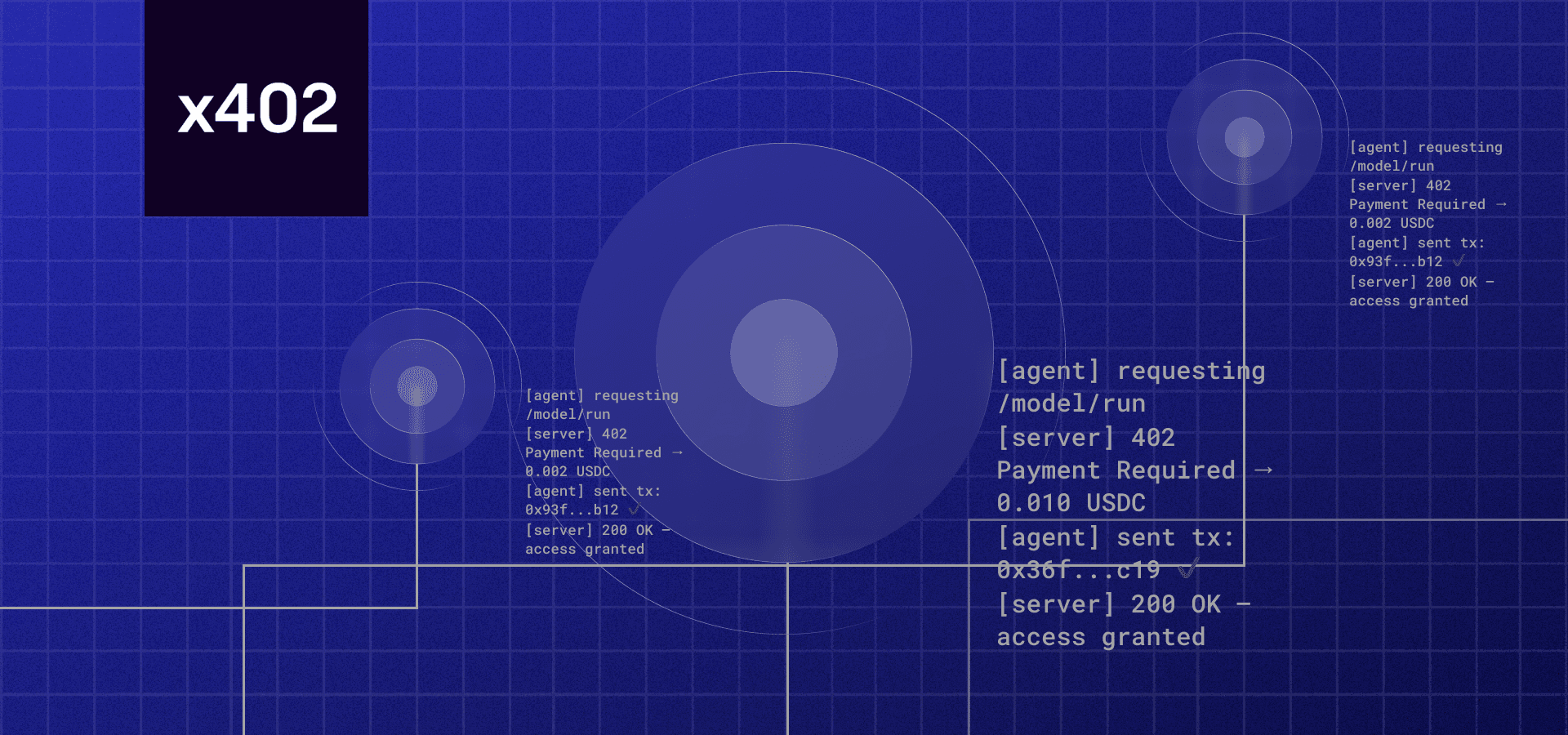
When an AI agent requests a resource, the server responds with a 402 status code instead of the usual 200 OK. This response includes a payment request containing the cost and acceptable payment methods. The agent then uses its wallet to send the required funds. Once the transaction is confirmed on the blockchain, the server unlocks the resource and returns the data. This process happens automatically, allowing agents to pay for exactly what they use in real time.
This mechanism bypasses traditional payment gateways that charge high fixed fees per transaction. For example, if an agent needs to scrape a small dataset, it can pay a few cents directly to the provider. There are no monthly subscriptions or complex billing cycles. The agent holds the funds and pays autonomously, while the human owner sets the budget and spending rules. This approach ensures that costs align directly with usage, making micro-transactions economically viable.
The protocol also supports facilitators to handle the complexity of transaction verification. These services verify payments and submit them to the blockchain using gasless transactions, leveraging standards like EIP-7702. This reduces the burden on the agent’s wallet and speeds up the process. The result is a seamless, standardized way for AI agents to monetize and consume data at scale.
x402 vs Traditional Payment Processors
Traditional payment processors like Stripe or PayPal were built for human commerce, not machine-to-machine interaction. They excel at handling $50 subscriptions or $200 one-time purchases, but they break down when applied to the micro-transaction scale required by AI inference. When an AI agent needs to call a model for a single token or a small reasoning step, the cost might be fractions of a cent. Traditional gateways often impose minimum transaction fees or require significant overhead for each charge, making sub-cent payments economically unviable.
x402 addresses this by embedding the payment logic directly into the HTTP protocol. Instead of a separate billing layer, the server responds with a 402 Payment Required status code, signaling that payment is needed to proceed. This allows agents to pay exactly what they use, when they use it, without the friction of pre-funded wallets or complex subscription management. As noted in community discussions, prepaid credit models essentially recreate the subscription model with extra steps, adding latency and complexity without solving the core issue of granular billing.
The table below highlights the structural differences between x402 and traditional processors in the context of AI agent interactions.
| Feature | x402 Protocol | Stripe / PayPal |
|---|---|---|
| Minimum Transaction Size | Sub-cent (fractions of a penny) | $0.10 - $0.30 + fixed fees |
| Payment Trigger | HTTP 402 Response | Checkout API / Webhook |
| Automation Level | Fully autonomous agent-to-agent | Requires human setup or complex APIs |
| Latency | Low (inline with request) | High (separate billing flow) |
| Billing Granularity | Per-token or per-request | Per-session or monthly subscription |
For developers and product managers, the choice isn't just about cost; it's about architectural fit. Traditional processors require agents to hold balances, manage refunds, and handle currency conversion, which adds significant engineering overhead. x402 simplifies this by treating payment as a standard HTTP response, allowing agents to operate with minimal human intervention. This is particularly useful for scenarios where agents need to pay for real-time data, compute resources, or other agents' services on the fly.
While x402 is still evolving, its design aligns with the needs of autonomous systems. It removes the need for pre-funded wallets and subscription management, enabling a more fluid economy where agents can transact at the speed of thought. For now, it serves as a specialized protocol for machine-to-machine commerce, complementing rather than replacing traditional payment systems for human-facing transactions.
The Role of the x402 Facilitator
The x402 protocol defines how an agent presents a payment credential, but it does not define how that payment is actually settled on the blockchain. This is where the facilitator enters the stack. Acting as an infrastructure layer, the facilitator handles the heavy lifting of transaction verification and submission, allowing agents to operate without managing private keys or gas fees directly.
Without this layer, an agent would need to hold native cryptocurrency (like ETH) to pay for its own execution costs. This creates a logistical bottleneck: the agent must first acquire funds, manage balance thresholds, and execute transactions, all of which introduce latency and complexity. The facilitator decouples the payment from the execution, enabling gasless transactions through account abstraction standards like EIP-7702.
How Facilitators Work
The process is straightforward for the agent. When an agent requests a service, it presents an x402 credential. The facilitator intercepts this request, verifies the signature against the backend’s public key, and ensures the payment is valid. Once verified, the facilitator submits the transaction to the blockchain using a server-side wallet.
This setup means the agent itself doesn’t need to be a smart contract or hold a balance. It simply needs to be able to generate the correct cryptographic proof. The facilitator handles the rest, abstracting away the blockchain mechanics. This is critical for agent-to-agent interactions, where speed and reliability are paramount.
Why This Matters for Micropayments
Traditional billing systems break down at the scale of AI agent interactions. An agent might perform a task worth $0.01. Paying this amount via a credit card processor would incur fees that exceed the transaction value, making the interaction economically unviable. x402, combined with a facilitator, enables frictionless micropayments.
The facilitator ensures that the verification and settlement happen quickly and cheaply. By leveraging EIP-7702, it can submit transactions without the agent needing to pay gas upfront. This allows agents to transact freely, enabling new economic models where services are sold in tiny, frequent increments rather than large, infrequent contracts.
Implementation Examples
Thirdweb offers a widely adopted facilitator service that integrates with popular middleware libraries like x402-hono and x402-next. Developers can configure their backend to route payments through the facilitator, ensuring that every x402 credential is properly verified and settled. This compatibility means that regardless of the framework an agent uses, the payment infrastructure remains consistent and reliable.
The facilitator’s role is purely infrastructural. It does not take custody of the agent’s funds or make decisions about spending. It simply ensures that the payment credential presented by the agent is valid and that the corresponding transaction is recorded on-chain. This separation of concerns keeps the agent lightweight and the payment process secure.
Common Questions About Agent Payments
Traditional billing infrastructure breaks down at the micropayment scale. Processing a $0.01 transaction via Stripe incurs fees that exceed the payment itself, making human-mediated billing impractical for autonomous agents. The x402 protocol solves this by embedding payment verification directly into the HTTP response layer, allowing machine-to-machine transactions to occur instantly and cheaply.
How do AI agents pay?
AI agents use a dedicated agent wallet to hold funds and execute transactions autonomously. This wallet typically employs a dual-key model: the agent controls the transaction keys for immediate operations, while the human owner retains the ability to set strict budget limits and spending rules. This structure ensures that agents can pay for API calls, data, or compute resources without constant human approval, routing payments through the most efficient blockchain rails available.
What is an x402 facilitator?
An x402 facilitator is a backend service that handles the verification and submission of x402 payments on behalf of the agent. Instead of requiring the agent to manage gas fees or complex wallet interactions, the facilitator leverages technologies like EIP-7702 to submit transactions gaslessly. This abstraction allows developers to integrate x402 compliance into middleware libraries—such as x402-hono or x402-next—without managing the underlying blockchain mechanics.
No comments yet. Be the first to share your thoughts!