
What is AI 402 Pay
AI 402 Pay is the practical implementation of the x402 protocol, an open standard designed to enable machine-to-machine commerce. It revives the dormant HTTP 402 "Payment Required" status code, which was originally defined in the HTTP/1.0 specification but never adopted for human web browsing. While the 402 code sat unused for decades as the web moved toward ad-supported and subscription models, it now serves as the foundation for autonomous AI agent settlements.
The x402 protocol transforms this legacy HTTP status into a functional payment instruction. When an AI agent requests access to a digital resource—such as an API endpoint, a data stream, or a computational service—it can receive a 402 response containing a payment instruction. This instruction includes the required cryptocurrency amount, the destination wallet address, and often a cryptographic proof of payment. The agent then executes the transaction, and upon verification, gains immediate access to the resource.
This mechanism shifts the paradigm of digital transactions from human-mediated billing to agent-mediated micropayments. Traditional payment systems require account creation, credit card storage, and manual authorization, creating friction that makes small, automated transactions impractical. AI 402 Pay removes these barriers by allowing agents to hold crypto wallets and settle debts in real-time. This enables new economic models where AI agents can buy and sell services autonomously, paying fractions of a cent for specific data points or compute cycles without human intervention.
By leveraging existing HTTP infrastructure, x402 ensures compatibility with current web standards. Developers do not need to build new payment rails; they simply need to configure their servers to return 402 responses with valid payment payloads. This approach lowers the barrier to entry for integrating machine commerce into existing applications, making it a viable solution for the emerging agent economy.
How the x402 Protocol Works
The x402 protocol revives the HTTP 402 status code to create a standardized method for machine-to-machine payments. Unlike traditional payment flows that require manual intervention or complex API integrations, x402 embeds payment instructions directly into the HTTP response. This allows AI agents to negotiate and settle transactions autonomously at the protocol level.
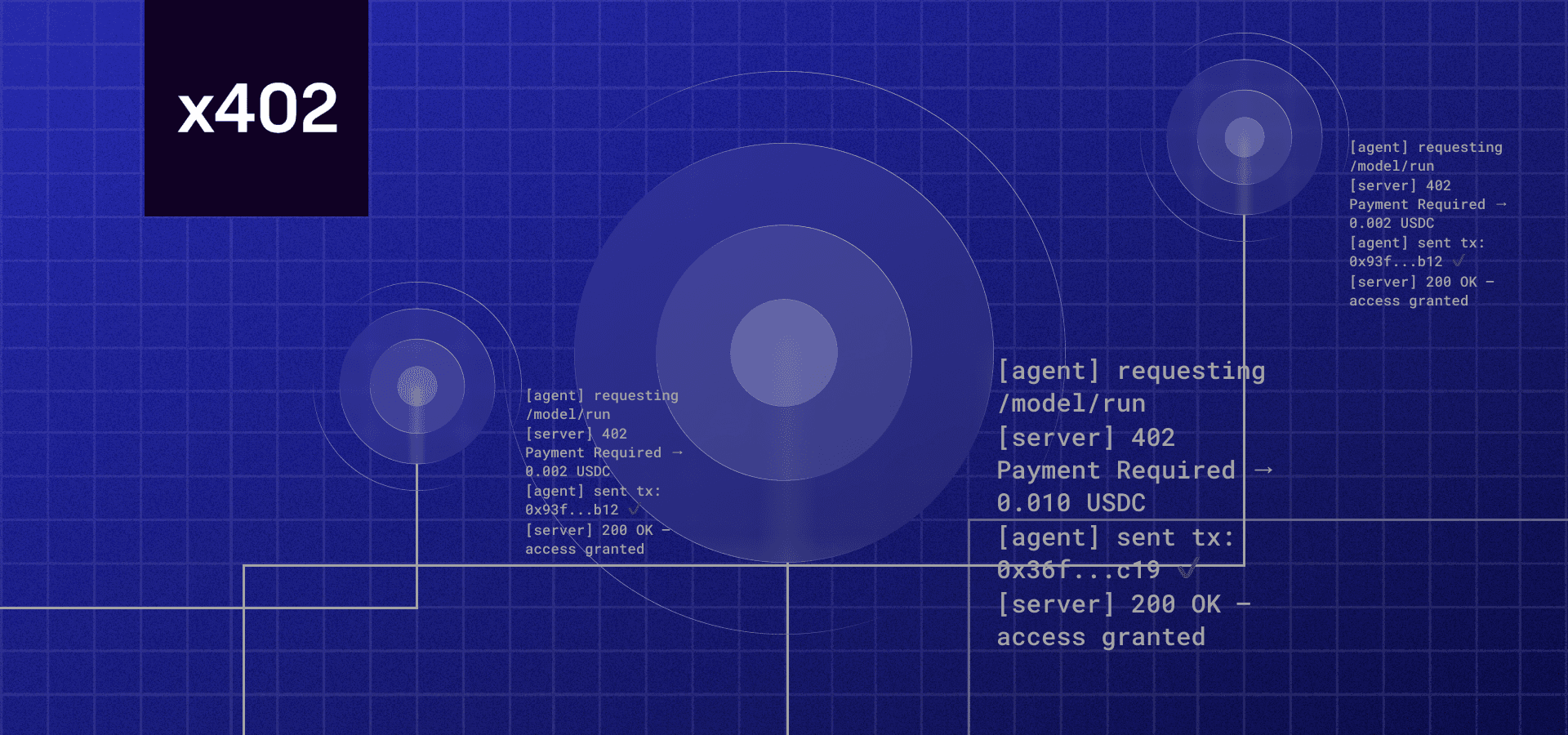
When an AI agent requests a resource that requires payment, the server responds with a 402 status code instead of a 200 OK. This response includes a structured payment request detailing the amount, currency, and wallet address. The agent parses this request, executes the payment via a compatible blockchain, and receives access to the resource.
This mechanism transforms the web from a passive information layer into an active economic layer. By leveraging the existing HTTP infrastructure, x402 enables seamless microtransactions for AI services without requiring users to manage private keys or approve individual transactions.
An AI agent sends an HTTP GET request to a server endpoint for a specific resource, such as data, an API call, or content access. The agent identifies itself as a machine-to-machine actor, signaling its capability to handle automated payments.
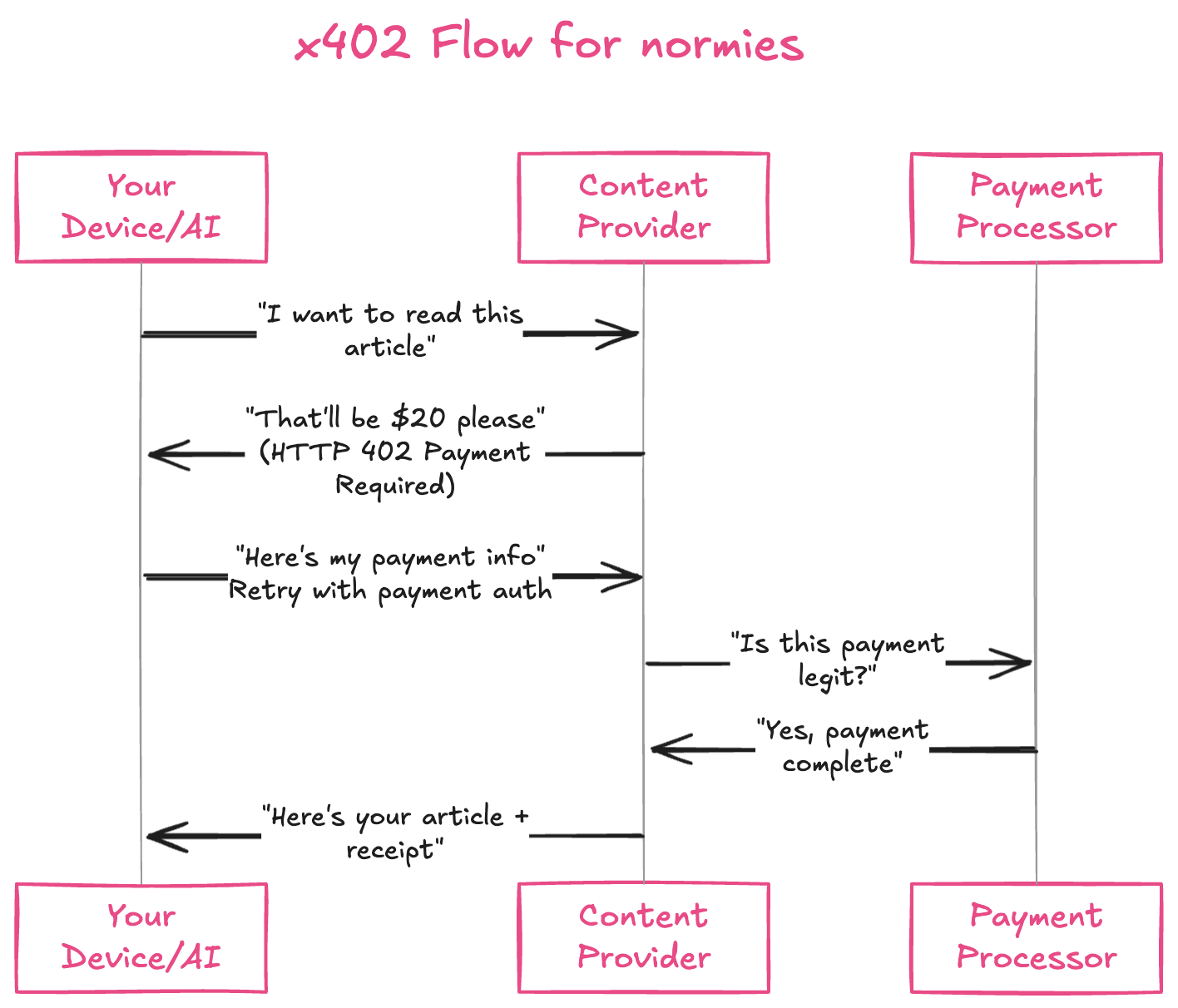
The server responds with an HTTP 402 status code. The response body contains a structured payment request, typically in JSON format, specifying the required amount, the cryptocurrency type, and the destination wallet address. This acts as a digital invoice embedded in the web request.
The AI agent processes the payment request, checks its own wallet balance, and initiates a blockchain transaction to the specified address. This step occurs automatically within the agent's runtime environment, leveraging smart contracts or payment channels to ensure atomicity and security.
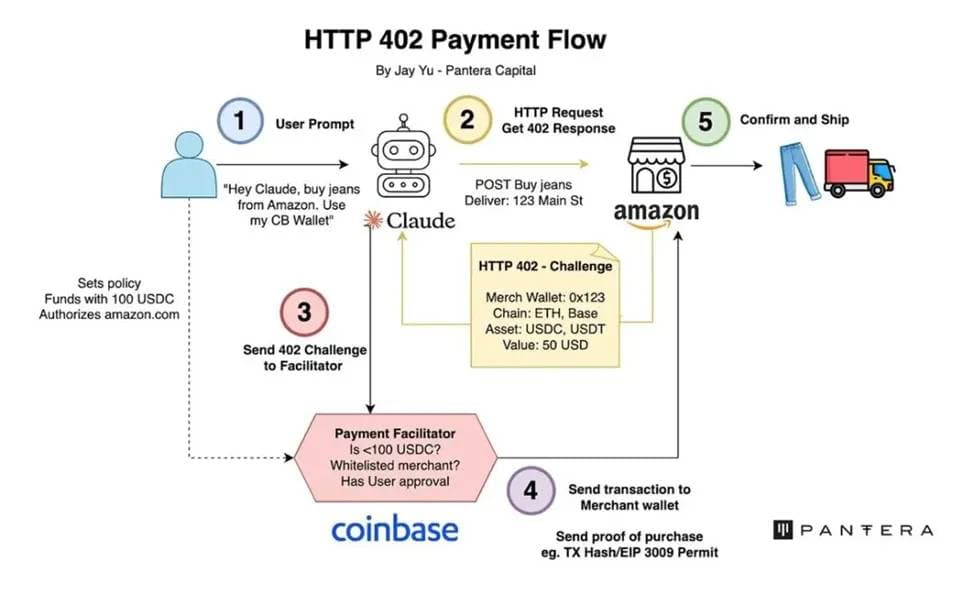
Once the payment is confirmed on the blockchain, the server verifies the transaction. Upon successful verification, the server grants the agent access to the requested resource, completing the transaction loop. The agent can now use the resource as intended.
This flow eliminates the friction of traditional payment gateways. By keeping the payment logic within the HTTP response, x402 ensures that access control and monetization are tightly coupled with the resource itself. This approach is particularly effective for high-volume, low-cost transactions typical in AI agent workflows.
AI 402 Pay vs Traditional API Billing
Most AI developers are accustomed to two billing models: subscriptions and token buckets. Subscriptions offer predictable costs but often result in paying for unused capacity. Token buckets, common in modern LLM APIs, require pre-purchasing credits that expire or remain dormant. Both models introduce friction for sporadic workloads, where an agent might run once a week or handle a burst of low-volume inference tasks.
AI 402 Pay (x402) flips this structure. Instead of pre-funding a wallet or maintaining a monthly contract, the x402 protocol enables direct, pay-per-use micropayments. When an agent calls an API, the server responds with an HTTP 402 status code, signaling that payment is required to proceed. The agent then settles the transaction—often in stablecoins—and receives the response. This eliminates the overhead of credit management and ensures you only pay for the exact compute used.
The following comparison highlights how x402 differs from traditional billing structures in terms of frequency, friction, and ideal use cases.
| Billing Model | Payment Frequency | Best For | Friction Level |
|---|---|---|---|
| Subscription | Monthly | High-volume, steady-state workloads | High (unused capacity costs) |
| Token Bucket | Prepaid (top-up) | Moderate, predictable usage | Medium (credit management) |
| x402 Micropayment | Per-request | Sporadic, low-volume, or bursty inference | Low (pay-as-you-go) |
For developers building autonomous agents that interact with external data sources or specialized models on an as-needed basis, the traditional models often feel like overkill. You do not need a monthly plan to query a weather API once a day, nor do you want to manage a credit balance for a script that runs only on weekends. x402 solves this by treating every API call as a discrete transaction. This aligns costs directly with utility, making it particularly effective for the emerging landscape of agent-to-agent commerce where micro-transactions are the norm rather than the exception.
Where AI 402 Pay Works Best
The x402 protocol shines in environments where human intervention is impossible or economically unviable. By embedding payment logic directly into the HTTP response, AI 402 Pay enables seamless B2B settlements for high-volume, low-latency tasks. This approach eliminates the friction of subscription models and prepaid credits, allowing agents to pay only for the exact data or computation they consume.
Data Scraping at Scale
Traditional scraping often relies on static API keys or IP rotation, which breaks down when providers need dynamic, per-request billing. x402 allows scrapers to request data, receive a 402 status with a price and terms, and automatically settle via crypto before receiving the payload. This creates a frictionless marketplace for real-time data, where providers can adjust prices based on demand without changing access credentials.
API Inference and Model Access
For AI inference endpoints, x402 solves the "metering problem." Instead of relying on third-party billing platforms to track token usage, the API itself acts as the billing gateway. An agent sends a request, the server responds with a 402 indicating the cost for that specific inference, and the agent pays instantly. This ensures that compute resources are protected against free-riding and that providers are compensated in real-time, aligning incentives between model hosts and consumers.
Edge Computing and IoT
In edge computing scenarios, devices often have limited connectivity and intermittent access. x402’s lightweight, HTTP-native design allows edge nodes to settle micro-transactions for services like image processing or data aggregation without complex authentication flows. This is particularly useful for IoT devices that need to pay for bandwidth or compute on-demand, enabling autonomous machine-to-machine economies where human oversight is unnecessary.
The core advantage of x402 in these use cases is its ability to turn any HTTP endpoint into a payment-enabled service. This is not just about adding a wallet to a website; it is about restructuring how digital goods are exchanged between autonomous agents. By removing the need for pre-negotiated contracts or manual invoicing, x402 enables a new class of decentralized, real-time B2B interactions.
Current Adoption and Market Activity
The experimental x402 protocol has shifted from theoretical design to rapid market integration, driven by major infrastructure providers. Coinbase and Cloudflare launched the protocol to enable direct machine-to-machine payments, allowing AI agents to settle transactions in stablecoins without human intervention.
Activity has surged dramatically, with reports indicating a 10,000% increase in x402 transactions over recent months. This spike reflects growing developer interest in automating micro-payments for API access and data services.
Simultaneously, Stripe has introduced "Machine Payments," leveraging similar principles to facilitate automated billing for digital goods. This convergence of major payment rails signals that AI 402 Pay is becoming a standard mechanism for machine economies.
No comments yet. Be the first to share your thoughts!